

Choose an activity
Introductory Activities
How can I incorporate engaging introductory activities to foster a sense of community and participation among students?

Activity purpose:
This activity is inspired by Renee Hobbs, Professor of Communication Studies at the University of Rhode Island, USA. It is a great warm-up activity that helps to build close connections between students.

Add Your Heading Text Here

Activity purpose:
This warm-up activity also works well as a fun way to introduce a new text. It can be used in any course that involves reading, where the instructor wants students to give an emotional or personal response to the text. It’s most often used at the beginning of a class, especially when introducing a new text - whether it’s a short story, poem, or article. The main aim is to engage students with the material and get a sense of how well they’ve prepared to discuss it.
Add Your Heading Text Here

Activity purpose:
This is a fun and quirky activity to break the ice and get to know each other or a warm-up exercise that could set the tone for collaboration activities.
Add Your Heading Text Here

Activity purpose:
This activity can be used in the first lesson of a new term or course when students meet with the teacher for the first time for an online or face-to-face class. The purpose of this activity is to break the ice and help students get to know each other.
Add Your Heading Text Here

Activity purpose:
This activity encourages students to reflect on themselves and compare how they feel and what they need to that of a plant. Through conversation and discussion, community can be strengthened. Sharing these reflections also fosters self-awareness and empathy.
Add Your Heading Text Here

Activity purpose:
To help participants reflect on language experiences, sharing biographical information. This promotes inclusivity and empathy, while building transferable skills for collaboration and self-advocacy beyond the academic setting.
Add Your Heading Text Here

Activity purpose:
This is a light, inclusive icebreaker that helps participants start connecting without needing to share personal information. It works well for groups of any size and helps set a relaxed tone for the session.

Add Your Heading Text Here

Activity purpose:
This activity uses creative, low-pressure portrait drawing to help students introduce themselves, build community, and overcome the fear of perfection. It encourages playful expression, supports diverse ways of knowing and creating, and sets a tone of experimentation - especially useful when launching creative projects or collaborative work.
Add Your Heading Text Here

Activity purpose:
Students share a meaningful object, photo, or link that represents something personal or course-related. The activity builds connection, encourages reflection, and fosters a welcoming, inclusive classroom community.
Add Your Heading Text Here

Activity purpose:
The purpose of this activity is to engage in a discussion about identity and difference.
Add Your Heading Text Here

Activity purpose:
The purpose of this activity is to get to know people's name on a more personal level through storytelling.
Add Your Heading Text Here
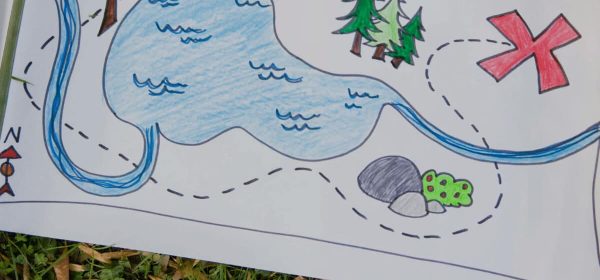
Activity purpose:
- Create positive engagement with new classmates;
- Demonstrate and celebrate the variety of students' experiences and backgrounds;
- Ensure the centrality of student voices from the first day of class;
- Give a taste of and curiosity about class themes;
- Connect class themes to students' experiences and lives.

Ongoing Engagement Activities
What ongoing engagement activities can I implement to sustain active involvement and collaboration within my teaching community?

Activity purpose:
This activity could be used as a community-building exercise, or even possibly an icebreaker, where students get to share more about themselves, in a new and different way. It engages students' creative and critical thinking through story, allowing them to recognise the degree to which 'origin' stories shape our understanding of the world, ourselves, others, teaching, and learning, etc., and recognising that sometimes we must write our own.
Activity purpose:
This activity can be carried out at any point during an academic year and works well as a brainstorming or pre-writing activity. It encourages students to engage in different ways of seeing and experiencing things through metaphors.

Add Your Heading Text Here

Activity purpose:
This activity is a twist on the children's game 20 Questions for kids, in which a player reads clues one by one while the other players try to guess the person, place, or thing. This version is ideal for introducing a new topic in an educational setting. The instructor distributes the clues among the students who then interact with one another to exchange information and guess what the topic might be.
Add Your Heading Text Here

Activity purpose:
For students to collaborate, get creative, and produce something that helps them feel closer to one another.
Add Your Heading Text Here
Activity purpose:
This activity is great for helping students to get to know each other and keeping the class atmosphere fun and engaging.
Add Your Heading Text Here

Activity purpose:
Help students share something about themselves, musical tastes, while building community as they speak about their musical choices.
Add Your Heading Text Here

Activity purpose:
This activity promotes both teacher and student wellbeing throughout the whole semester (beginning, middle and end). It helps you and students to connect as human beings and communicate effectively.
Add Your Heading Text Here

Activity purpose:
Allow students to cooperate and solve problems. Originally created as a language-learning activity to help students learn verb conjugation in Arabic, Spanish, French, Italian, English etc, this activity can be adapted to teach discipline-specific content. For example, it can be used in social sciences by putting a picture on one side and a name or a definition on the other side. It can also be used in mathematics, where the result is on the side and the mathematical problem on the other side.
Add Your Heading Text Here
Activity purpose:
This is a fun and quirky activity to break the ice and get to know each other or a warm-up exercise that could set the tone for collaboration activities.
Add Your Heading Text Here

Activity purpose:
To build students’ confidence and oral presentation skills through light-hearted, improvised presentations using unexpected visual prompts.


Add Your Heading Text Here
Activity purpose:
To help participants reflect on language experiences, sharing biographical information. This promotes inclusivity and empathy, while building transferable skills for collaboration and self-advocacy beyond the academic setting.

Activity purpose:
A great icebreaker for multicultural classrooms that celebrates linguistic diversity and creativity. It encourages students to share unique, untranslatable words from different languages, fostering cultural understanding, connection, and engaging conversations about language and meaning.
Add Your Heading Text Here
Activity purpose:
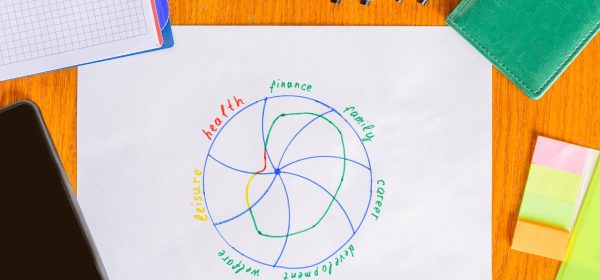
Help individuals visually their wellbeing and the level of satisfaction in their current circumstances. Identify imbalances or areas needing attention, and support goal-setting for greater overall wellbeing and personal growth.
Add Your Heading Text Here

Activity purpose:
To respect the dignity of each person by providing a slower, thicker, and more deliberate opportunity for everyone to introduce themselves.
Add Your Heading Text Here

Activity purpose:
Help students develop metacognitive learning strategies, which refer to the ability to think about one's own thinking processes. By engaging in metacognitive activities, students can become more aware of their own learning processes, monitor their own progress, and ultimately become more independent and effective learners.
Add Your Heading Text Here

Activity purpose:
Encourage students to look at what's working and what can be changed in a constructive manner that can lead to action.
Add Your Heading Text Here

Activity purpose:
The purpose of the Pass the Paper activity is to provide participants with an opportunity to connect synchronously through writing rather than speaking, whether in a face-to-face or online environment.
Add Your Heading Text Here

Activity purpose:
Encourage student wellbeing through a simple gratitude practice that fosters reflection, joy, and radical self-compassion. Flexible for use throughout the term, it helps build emotional awareness and a positive mindset.
Add Your Heading Text Here

Activity purpose:
The 15% Solution is a fun and creative way to solve problems with a group of students (or teachers). It encourages people to work together as a team and use everyone's different ideas and perspectives to come up with the best solution. View the original activity.
Add Your Heading Text Here

Activity purpose:
Capturing student learning or for use as a cool-down activity at the end of a class. It can be adopted to check students’ understanding after they have finished a reading, video or module.

Add Your Heading Text Here

Activity purpose:
Get students used to supporting each other and helping each other without always turning to an expert or teacher to solve problems; also useful for quick problem-solving.
Add Your Heading Text Here

Activity purpose:
Help students develop their critical thinking and problem-solving skills. According to the Liberating Structures website, TRIZ can 'stop counterproductive activities and behaviors to make space for innovation'.
Add Your Heading Text Here

Activity purpose:
This video was a recorded interview where Dave Cormier asked Maha Bali to give a recommendation for online learning during the pivot to emergency remote teaching during Covid-19.
Creating semi-formal, semi-synchronous spaces outside of formal class time for students to socialize with each other (and the teacher where possible) to address the socioemotional needs of students.
Add Your Heading Text Here

Activity purpose:
To invite students to use their bodies to represent, collaboratively, an image of something that is worth discussing, and then use the resulting 'tableau' combined as a source of critical reflection, and then invite participants to make changes to make the image different (e.g. if it is an oppressive situation, how can we make small modifications to make it more liberating?)
Add Your Heading Text Here
Activity purpose:
This activity uses creative, low-pressure portrait drawing to help students introduce themselves, build community, and overcome the fear of perfection. It encourages playful expression, supports diverse ways of knowing and creating, and sets a tone of experimentation - especially useful when launching creative projects or collaborative work.
Add Your Heading Text Here

Activity purpose:
Bring in external speakers into your classroom via a 'studio visit', an informal discussion with one or two external guests. Visits can take place in person or virtually, depending on what works best for your context.
Add Your Heading Text Here

Activity purpose:
This is a pair or trio activity which is ideal for reflection and also to practice focused listening. Structured dialogues can work well with teens and adults in a variety of learning contexts or communities.
Add Your Heading Text Here

Activity purpose:
Encourages students think critically about a given topic. This activity can work well as a reflective activity where students are encouraged to reflect on their learning experiences and identify what they consider to be the most challenging or frustrating aspects of a course.
Add Your Heading Text Here

Activity purpose:
Daily Creates (also sometimes know as 'Daily Digital Alchemy' or #DDAs in the context of #NetNarr) is creative challenge posted every day. It provides a space for regular, low-stakes practice of spontaneous creativity through mini creative challenges. This activity encourages students to develop creative confidence, express ideas playfully, and engage in community-building in an inclusive, flexible way.

Add Your Heading Text Here

Activity purpose:
To create a space where all students can engage in open, respectful, and meaningful conversations about complex or challenging topics. Conversation Café helps participants make sense of difficult issues, build trust, and gain insight into different perspectives through structured rounds of listening and sharing.

Add Your Heading Text Here

Activity purpose:
This activity helps students build key research and writing skills - close reading, summarising, paraphrasing, and citation - while collaborating on a shared literature review matrix. It supports preparation for class discussions or literature reviews by encouraging synthesis across sources and peer learning.
Add Your Heading Text Here

Activity purpose:
To foster deep listening and reflective dialogue by helping individuals uncover the deeper motivations behind their actions or goals - simply by being asked “why” multiple times. This structure helps both students and educators explore what truly matters in their learning or work. As Liberating Structures puts it: “The shared discovery of purpose is always eye-opening and rewarding.”
Add Your Heading Text Here

Activity purpose:
Annotation is the addition of a note to a text. Syllabi are important texts in the lives of educators and learners. Yet a syllabus is an educator's draft vision of teaching yet enacted, a preamble to learning yet accomplished. To help learners read, make sense of, question, and discuss their course and learning, invite learners to annotate the syllabus. This activity is appropriate for online, hybrid, and face-to-face courses. This activity can occur both synchronously and asynchronously depending on the format of the course syllabus and the technology used for annotation. This activity is an informal, low-stakes means for students to connect with one another through their discussion of an important text - the syllabus.
Reflective Activities
How can I integrate reflective activities to promote deep learning and self-awareness among students in higher education?

Add Your Heading Text Here

Activity purpose:
- Encourage students to reflect on students' personal values and goals.
- Develop a sense of purpose and direction in their lives.
- Think about how students want to live their lives, what they are passionate about, what knowledge and skills they want to acquire, and how they can make a positive impact on the world.
- Motivate students to pursue careers and engage in activities that align with their values and passions, and that have the potential to make a positive difference in the world.

Add Your Heading Text Here

Activity purpose:
The main purposes are to build community, build learner confidence in their writing, and encourage participants to integrate creative activities into their academic writing process.
Activity purpose:
This activity can be carried out at any point during an academic year and works well as a brainstorming or pre-writing activity. It encourages students to engage in different ways of seeing and experiencing things through metaphors.

Add Your Heading Text Here

Activity purpose:
The purpose of the activity is to help learners reflect on their own strengths, passions, things they believe the world needs, and things they can themselves contribute constructively to the world.
Add Your Heading Text Here

Activity purpose:
The purpose of this activity is to invite reflection from participants/learners on what they consider enjoyable, what they consider valuable, and what activities/things they consider to be BOTH or NEITHER.
Add Your Heading Text Here
Activity purpose:
To respect the dignity of each person by providing a slower, thicker, and more deliberate opportunity for everyone to introduce themselves.
Add Your Heading Text Here
Activity purpose:
Help students develop metacognitive learning strategies, which refer to the ability to think about one's own thinking processes. By engaging in metacognitive activities, students can become more aware of their own learning processes, monitor their own progress, and ultimately become more independent and effective learners.

Add Your Heading Text Here
Activity purpose:
Encourage students to look at what's working and what can be changed in a constructive manner that can lead to action.
Add Your Heading Text Here
Activity purpose:
The purpose of the Pass the Paper activity is to provide participants with an opportunity to connect synchronously through writing rather than speaking, whether in a face-to-face or online environment.
Add Your Heading Text Here
Activity purpose:
Encourage student wellbeing through a simple gratitude practice that fosters reflection, joy, and radical self-compassion. Flexible for use throughout the term, it helps build emotional awareness and a positive mindset.
Add Your Heading Text Here
Activity purpose:
Capturing student learning or for use as a cool-down activity at the end of a class. It can be adopted to check students’ understanding after they have finished a reading, video or module.
Add Your Heading Text Here
Activity purpose:
To invite students to use their bodies to represent, collaboratively, an image of something that is worth discussing, and then use the resulting 'tableau' combined as a source of critical reflection, and then invite participants to make changes to make the image different (e.g. if it is an oppressive situation, how can we make small modifications to make it more liberating?)
Add Your Heading Text Here

Activity purpose:
Promote focus and reflection while allowing individuals to compose responses thoughtfully and calmly in writing. This can help generate and gather large amounts of data quickly and can amplify or punctuate large group interactions.
Add Your Heading Text Here
Activity purpose:
Annotation is the addition of a note to a text. Syllabi are important texts in the lives of educators and learners. Yet a syllabus is an educator's draft vision of teaching yet enacted, a preamble to learning yet accomplished. To help learners read, make sense of, question, and discuss their course and learning, invite learners to annotate the syllabus. This activity is appropriate for online, hybrid, and face-to-face courses. This activity can occur both synchronously and asynchronously depending on the format of the course syllabus and the technology used for annotation. This activity is an informal, low-stakes means for students to connect with one another through their discussion of an important text - the syllabus.
Setting the Tone Activities
What strategies can I employ in setting the tone activities to establish a supportive and inclusive learning environment for all students?
Activity purpose:
This activity is inspired by Renee Hobbs, Professor of Communication Studies at the University of Rhode Island, USA. It is a great warm-up activity that helps to build close connections between students.

Activity purpose:
Many educators are bringing discussions of self-care into the classroom, and using those discussions as a way to encourage skills for success in educational environments. This activity could be very helpful in setting the tone for that kind of care. Additionally, it could also be used as a community-building exercise, as everyone shares how broader concepts of love relate to their learning experiences (and vice versa). This activity can be used at any point during a term.
Add Your Heading Text Here

Activity purpose:
Consider different approaches to grading and how they can affect the classroom atmosphere and more!
Add Your Heading Text Here

Activity purpose:
This activity gives students the opportunity to explore an auditory digital tool, tune into their feelings, reflect on the experience, and share their thoughts/feelings with a partner or small group.
Add Your Heading Text Here
Activity purpose:
This activity promotes both teacher and student wellbeing throughout the whole semester (beginning, middle and end). It helps you and students to connect as human beings and communicate effectively.

Add Your Heading Text Here
Activity purpose:
Encourage student wellbeing through a simple gratitude practice that fosters reflection, joy, and radical self-compassion. Flexible for use throughout the term, it helps build emotional awareness and a positive mindset.
Add Your Heading Text Here
Activity purpose:
This video was a recorded interview where Dave Cormier asked Maha Bali to give a recommendation for online learning during the pivot to emergency remote teaching during Covid-19.
Creating semi-formal, semi-synchronous spaces outside of formal class time for students to socialize with each other (and the teacher where possible) to address the socioemotional needs of students.
Add Your Heading Text Here

Activity purpose:
Engage students in activities to discuss/explore ethical issues in structured ways that enable creative problem-solving.
Add Your Heading Text Here

Activity purpose:
To co-develop a set of 'community guidelines' for the class with students, using a structured approach called Purpose to Practice which reminds us all that while guidelines are often lists of practices/behaviors that are acceptable/unacceptable in a certain context, they should always be rooted in the purpose behind them.


Warm Up Activities
What warm-up activities can I utilize to energize and prepare students for meaningful participation in higher education classes?
Activity purpose:
This activity could be used as a community-building exercise, or even possibly an icebreaker, where students get to share more about themselves, in a new and different way. It engages students' creative and critical thinking through story, allowing them to recognise the degree to which 'origin' stories shape our understanding of the world, ourselves, others, teaching, and learning, etc., and recognising that sometimes we must write our own.
Add Your Heading Text Here
Activity purpose:
This activity is a twist on the children's game 20 Questions for kids, in which a player reads clues one by one while the other players try to guess the person, place, or thing. This version is ideal for introducing a new topic in an educational setting. The instructor distributes the clues among the students who then interact with one another to exchange information and guess what the topic might be.
Add Your Heading Text Here
Activity purpose:
This activity gives students the opportunity to explore an auditory digital tool, tune into their feelings, reflect on the experience, and share their thoughts/feelings with a partner or small group.
Add Your Heading Text Here

Activity purpose:
Creativity Boosters are short, purposeful activities used at the start of class to energise students and spark creative thinking. They work well as ice breakers and help students shift into learning mode. These activities can support both visually creative subjects (like design or visual arts-focused classes) and non-visual courses that involve creative problem solving (such as science, business, or social sciences).
There are different creativity boosters: some invite students to quiet and focus their minds, see '5 Senses', some invite students to discover feelings of empathy, see 'An Ode to the Left Hand', some invite students to get silly and quiet their inner critics, see 'Yes! Let's.
Add Your Heading Text Here

Activity purpose:
Creativity Boosters are short, purposeful activities used at the start of class to energise students and spark creative thinking. They work well as ice breakers and help students shift into learning mode. These activities can support both visually creative subjects (like design or visual arts-focused classes) and non-visual courses that involve creative problem solving (such as science, business, or social sciences).
There are different creativity boosters: some invite students to think visually, see '16 squares', some invite students to quiet and focus their minds, see '5 Senses', some invite students to get silly and quiet their inner critics, see 'Yes! Let's'.
Add Your Heading Text Here

Activity purpose:
Creativity Boosters are short, purposeful activities used at the start of class to energise students and spark creative thinking. They work well as ice breakers and help students shift into learning mode. These activities can support both visually creative subjects (like design or visual arts) and non-visual courses that involve creative problem solving (such as science, business, or social sciences).
There are different creativity boosters: some invite students to think visually, see '16 squares', some invite students to discover feelings of empathy, see 'An Ode to the Left Hand', some invite students to get silly and quiet their inner critics, see 'Yes! Let's'.
Add Your Heading Text Here

Activity purpose:
Creativity Boosters are short, purposeful activities used at the start of class to energise students and spark creative thinking. They work well as ice breakers and help students shift into learning mode. These activities can support both visually creative subjects (like design or visual arts-focused classes) and non-visual courses that involve creative problem solving (such as science, business, or social sciences).
There are different creativity boosters: some invite students to think visually, see '16 squares', some invite students to discover feelings of empathy, see 'An Ode to the Left Hand', some invite students to quiet and focus their minds, see '5 Senses'.
Add Your Heading Text Here

Activity purpose:
A warm-up or icebreaker to foster engagement and connection among participants. It encourages conversation, sparks debate around personal preferences, and promotes interaction. Because it relies on hypothetical or binary choices, it can be reused with the same group without becoming repetitive. This activity can also be used to solicit learner feedback throughout the course, or as a prompt for students (have them create their own binaries).
Add Your Heading Text Here

Activity purpose:
This activity is based on the popular British radio show Desert Island Discs, which asks famous people what music they would take with them to a desert isle. According to Peter McDonald, one of the contributors to the show, the purpose of the activity is to express opinions, feelings, emotions, talk about likes/dislikes, converse about past experiences. This music activity will help students to create and voice their feelings in a positive way and can lead to in-class discussions.
Add Your Heading Text Here

Activity purpose:
This engaging activity can be used as a warm-up before class. It is also particularly useful for language learners to help them recycle learned vocabulary, and enhance speaking skills in a light and humorous way.

Add Your Heading Text Here
Activity purpose:
To build students’ confidence and oral presentation skills through light-hearted, improvised presentations using unexpected visual prompts.
Activity purpose:
A great icebreaker for multicultural classrooms that celebrates linguistic diversity and creativity. It encourages students to share unique, untranslatable words from different languages, fostering cultural understanding, connection, and engaging conversations about language and meaning.
Add Your Heading Text Here
Activity purpose:
To respect the dignity of each person by providing a slower, thicker, and more deliberate opportunity for everyone to introduce themselves.

Add Your Heading Text Here

Activity purpose:
Make the most of the 5–10 minutes before class starts or during a break to create a relaxed, welcoming atmosphere. These small moments can encourage timely attendance, spark informal conversations, and help build a sense of community, whether you're teaching online or in person.

Add Your Heading Text Here

Activity purpose:
To activate students’ focus and mental flexibility through playful engagement. This activity helps students shift attention, sharpen concentration, and energise their bodies and minds- especially useful before class or after a break.
Add Your Heading Text Here
Activity purpose:
To invite students to use their bodies to represent, collaboratively, an image of something that is worth discussing, and then use the resulting 'tableau' combined as a source of critical reflection, and then invite participants to make changes to make the image different (e.g. if it is an oppressive situation, how can we make small modifications to make it more liberating?)
Add Your Heading Text Here
Activity purpose:
Students share a meaningful object, photo, or link that represents something personal or course-related. The activity builds connection, encourages reflection, and fosters a welcoming, inclusive classroom community.
Add Your Heading Text Here

Activity purpose:
To energise students and help them connect with classmates through quick, rotating conversations. This activity encourages speaking, listening, and building a sense of community - ideal for starting classes or group work sessions.
Add Your Heading Text Here

Activity purpose:
To check how your students are feeling on the day. This is a good way to start any class, in person or online, and can be as fast or as slow as you are comfortable.
Add Your Heading Text Here
Activity purpose:
Promote focus and reflection while allowing individuals to compose responses thoughtfully and calmly in writing. This can help generate and gather large amounts of data quickly and can amplify or punctuate large group interactions.
Liberating Structures Activities
How can I leverage Liberating Structures activities to empower students and facilitate inclusive dialogue and decision-making in higher education communities?
Add Your Heading Text Here
Activity purpose:
The 15% Solution is a fun and creative way to solve problems with a group of students (or teachers). It encourages people to work together as a team and use everyone's different ideas and perspectives to come up with the best solution. View the original activity.
Add Your Heading Text Here
Activity purpose:
Get students used to supporting each other and helping each other without always turning to an expert or teacher to solve problems; also useful for quick problem-solving.
Add Your Heading Text Here
Activity purpose:
Help students develop their critical thinking and problem-solving skills. According to the Liberating Structures website, TRIZ can 'stop counterproductive activities and behaviors to make space for innovation'.
Add Your Heading Text Here
Activity purpose:
Engage students in activities to discuss/explore ethical issues in structured ways that enable creative problem-solving.
Add Your Heading Text Here
Activity purpose:
To co-develop a set of 'community guidelines' for the class with students, using a structured approach called Purpose to Practice which reminds us all that while guidelines are often lists of practices/behaviors that are acceptable/unacceptable in a certain context, they should always be rooted in the purpose behind them.
Add Your Heading Text Here
Activity purpose:
To energise students and help them connect with classmates through quick, rotating conversations. This activity encourages speaking, listening, and building a sense of community - ideal for starting classes or group work sessions.
Add Your Heading Text Here
Activity purpose:
To create a space where all students can engage in open, respectful, and meaningful conversations about complex or challenging topics. Conversation Café helps participants make sense of difficult issues, build trust, and gain insight into different perspectives through structured rounds of listening and sharing.
Add Your Heading Text Here
Activity purpose:
To foster deep listening and reflective dialogue by helping individuals uncover the deeper motivations behind their actions or goals - simply by being asked “why” multiple times. This structure helps both students and educators explore what truly matters in their learning or work. As Liberating Structures puts it: “The shared discovery of purpose is always eye-opening and rewarding.”
Add Your Heading Text Here
Activity purpose:
Promote focus and reflection while allowing individuals to compose responses thoughtfully and calmly in writing. This can help generate and gather large amounts of data quickly and can amplify or punctuate large group interactions.