

Want full access to our 'The Science Of Learning' content?
Wondering how we could help with teaching at your institution? Let's have a conversation

The Science Of Learning
Advancements in neuroscience and educational psychology have deepened our understanding of the learning process. We now have a clearer picture of the brain’s ability to adapt and respond to new information and experiences and to turn this into learning and cognition. In this section, we explore the main discoveries and how we can apply them in our classrooms. We discuss how explaining the process of learning to our students can help them develop lifelong learning skills that extend beyond their time with us. And we look at the role of emotions in learning and how we can work with them to create experiences that resonate for our students.
The Foundations of Learning
While learning comes naturally to us—we have been doing it since birth, after all—it doesn’t always come naturally in the classroom environment. The research on how human brains learn requires translation from laboratory experiments and brain scans into concrete methods for course design and classroom practice. The resources in this section provide models for that translation work, drawing from the scientific research on learning to inform our work as college and university educators.
Get started


Interleaving - the spacing out and mixing up of learning activities over time - promotes long-term knowledge retention. In this course, we look at how you can interleave within a unit of study, across a module and an entire course to maximise impact on student learning.

Helping Students Learn
Self-awareness about the learning process, sometimes called metacognition, has the power to enhance student learning. When it’s missing, though, it can have the opposite effect. Misunderstandings about learning can limit students from achieving the goals of a course, or even their education more generally. First teachers need to educate themselves about the research on metacognition, and then fold assignments or activities into their courses that will lead students into greater self-awareness of their learning habits.
Get started


Understanding Emotions in Learning
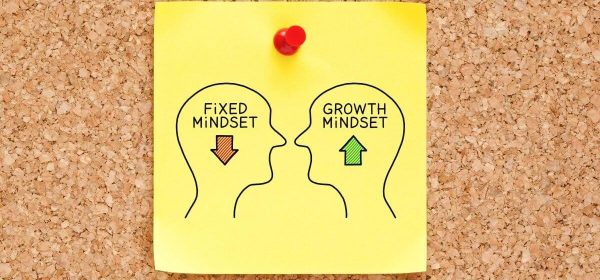
We tend to think about the process of learning in purely cognitive terms, focusing on the mechanics of memorisation or problem-solving. But emotions are intertwined with every aspect of our lives, including learning. Attention to the emotional features of both teaching and learning can ensure that we are motivating and supporting students throughout their courses and degree programs.
Get started



Small Teaching Tips
Making changes to our teaching can seem like an intimidating process, especially once we have become aware of the extensive research on the science of learning. The ‘small teaching’ approach provides manageable entry points to this work, identifying places where ‘small changes’ provide the greatest impact on both learning and motivation.
Get started



- Retrieval Practice: Making Best Use of the Online Classroom
- Retrieval Practice: Getting the Most From Closing Questions
- Retrieval Practice: How to Ask Effective Opening Questions
- 3 Quick Feedback Strategies
- 3 Tips for Starting the Semester Strong
- 3 Tips for Using AI to Encourage Critical Thinking
- 3 Ways to Use Al In the Classroom
- 3 Ways to Encourage Classroom Discussion
- 3 Ways To Provide Effective Feedback To Students
- Dos and Don’ts of Using AI for Admin Tasks