
Helping Students Reclaim Cognitive Resources in Education: Interview with Cia Verschelden
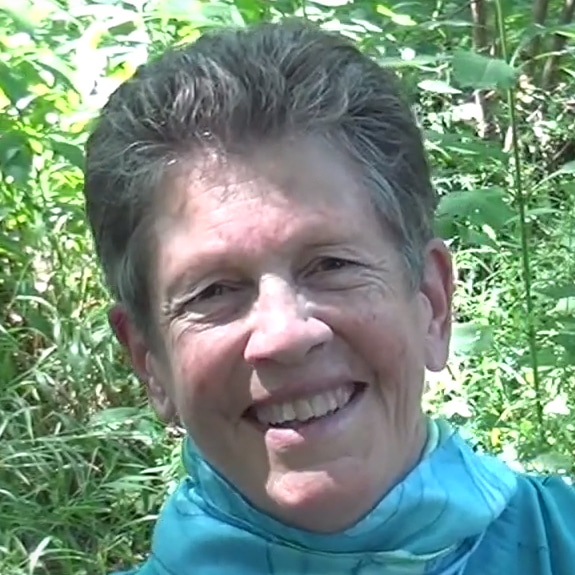
Cia Verschelden
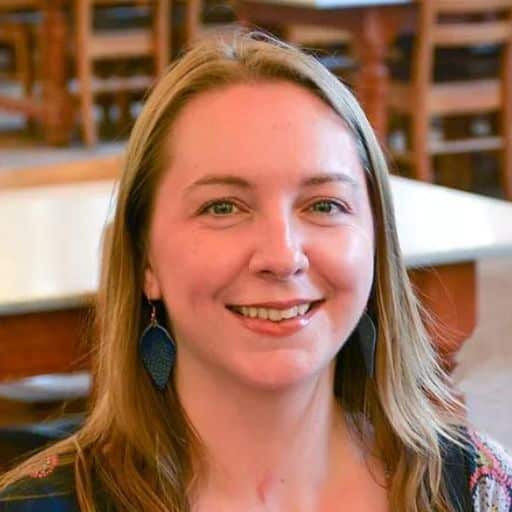
Niya Bond

Click on this text to view the video transcript
– Hi, everyone. I’m Niya Bond. The Faculty Developer here at OneHE, and I’m so glad to be with you today talking to Cia Verschelden who’s gonna talk to us about “Bandwidth Recovery” and K through 12 education. Welcome, Cia.
– Excellent, thank you. Thank you for asking me. I’m talking with everyone from Wichita, Kansas, which is in the United States. Wichita’s right in the middle of Kansas. Kansas is a rectangle, and we’re about right in the middle. It’s about two hours from where I live, which is in Manhattan, Kansas, where Kansas State University is. So I’m here in my son’s apartment.
– Well, thank you for being here with us today. I’m hoping you can share a little bit with the community, just who you are and what you’ve been up to in education lately.
– Yeah, well, I am a person who was on a faculty at Kansas State University for many years. 11 years actually in social work. My social work degree is big picture social work, social policy, social welfare history, and taught there for a long time. Spent some time being Director of Women’s Studies. I’ve taught non-violence. I’ve taught first year experience programs. And a few years ago, I wrote a book called “Bandwidth Recovery,” which was about the ways in which poverty, racism, sexism, classism, ableism, ageism, all those differentisms, and homophobia, things like that rob college students of available cognitive capacity, which I call bandwidth.
So bandwidth is how much of our cognitive capacity we have available in a classroom or at work. So it’s not about how smart we are, it’s about how much of that cognitive capacity we have available. And I think of it about the width of my head is how much, if I had all my bandwidth, it’d be about this much. And ways in which poverty, so if you’re worried about money all the time, people who are poor start their best days with maybe this much bandwidth because part of their brain’s always worried about money and what money can buy. If you are in a minoritised group, if you’re Black or brown, or have a disability, or are an immigrant, or English is not your first language, you can list the things. Or you’re gay, lesbian, or trans. In certain communities, this is all contextual, that worry about your safety, acceptance, being treated fairly, given the stereotypes of some of those groups, if you don’t feel like you belong or you’re safe, in your mind is always roiling these questions. Will I be safe? Will I be loved? Will I be treated fairly? Can I succeed here? Whatever, here is school, work, life.
So, I wrote that book about college students and I’ve given talks and still give talks all over this country and some internationally about how we can create learning environments that help us all to regain the bandwidth we lose to these big societal things like racism, classism, and ableism, et cetera. So, a couple of years ago, I wrote another book that addressed this same issue but for pre-K to 12 students. So, how does growing up in poverty, if you have a disability, and I focus more on childhood trauma since I was dealing more with children. How do those things affect students starting at age two, three, four when they go to preschool? How does that affect their available cognitive capacity? If children are hungry or fearful or there’s lots of chaos at home due to lots of other things that are affecting their parents, for instance, and the other adults in their lives. How does that affect their ability to learn in preschool and then on through elementary school, high school, et cetera, which, then all of that, affects their chances of getting into college and succeeding at college. So it’s all part of the continuum.
So, I’ve been working at the college level, and that’s been most of my career. But actually, many of the issues we see in college of students, for instance, coming not prepared with college skills, are the result of what we have done or not done in the pre-K to 12 system. So, I have become more interested in starting younger and working with professionals in how they can create learning environments that will allow the students to regain the bandwidth they lose to these other things in their lives. And when they’re children, all of the things are out of their control. So these are children who are living with whatever they’re living with, like we all did growing up. We live where we live and we’re in the family we’re in, and all of our families have struggles and assets and the kids come to school with those.
– Interesting, so I keep thinking about the continuum that you mentioned. Are you finding, as you’re kind of focusing more on the K to 12 or pre-K to 12, that the bandwidths and the ways to create belonging educational environments are very different? Or is there quite a bit of overlap?
– I’m just more and more thinking the strategies fundamentally are the same all the way through the lifespan. Minimize uncertainty where we can, affirm people, build community. I think those are things that are principles that go across all these age groups.
– Yeah, that makes sense. And I mean, we’re talking about just different learning experiences at different parts of development, but it makes sense that the principals might be the same or similar.
– Yeah, and I wanna mention another principle that kind of the bandwidth perspective. And in this book about pre-K to 12, I, of course, focus on the students, but I also have sections on the bandwidth challenges of parents, and of teachers, and of school leaders. And I wrote the book, I was able to, with timing, I think there’s a little epilogue or whatever it was called about the challenges of the pandemic, but I wrote most of it before that. But even beside the pandemic, it’s a tough thing to be a school teacher, little kids, especially in places where kids are coming with lots of challenges, and that’s a lot of places. You don’t have to be poor, for instance, to come with challenges. And parents have a lot of challenges.
In the United States, which is where the book is based, economic inequality, the level of economic inequality results in millions of families not really having the resources they need for even adequate housing, nutrition, et cetera, just wellbeing. And so lots of kids are coming to school hungry and without, you know, a coat in the winter or whatever the challenges are. And that’s just the physical part. And given our drug addictions at 100,000 people a year, I just read, died of opioid overdoses a year for the last few years, that’s a lot of people. And those are people’s parents, and so those kids are in our schools. There are just so many things challenging our kids. School shootings, which kind of is an overarching threat that hangs over our school systems now. So I wanted to try to recognize in the book the bandwidth challenges of parents, of teachers, of school leaders, and what the implications of that are that… Some of it’s just attitude, looking at people and realizing what they might be facing at home, or in their own personal lives, or in their own mental or physical health that might explain…
Sometimes, we have colleagues or parents in a school who respond to feedback or just a situation in ways that don’t make very much sense. Well, my first question is, “Hmm, I wonder what’s happening with them.” And children who have trauma and adults who have experienced childhood trauma, often that’s that trauma still part of their reaction. Children who live in kind of chaotic situations with might have some violence are, for instance, super vigilant. So they’re kind of jumpy, you might say. So when people respond in ways that I don’t expect, this bandwidth perspective suggests to me, “Oh, I wonder what’s taken up their bandwidth?” Because they don’t seem to have what they need of their cognitive capacity to think, slow down, and respond, let alone learn and thrive in school. So I think those… You could call that trauma informed practice. And I know on OneHE, there’s several courses that I’ve watched on trauma informed practice. And this is consistent with that kind of attitude, but it also works with, I mean, with students, but also with colleagues, and with parents dealing with teachers, and teachers dealing with parents that we realize we’re all doing our best, but sometimes, that’s not very good because of all these challenges that are taking away our ability to bring our whole brain power, our whole bandwidth to an issue.
– Wondering if you can remind our community just one more time about the title of your book and where they can learn more about these compassionate strategies and ideas.
– Yes, now it’s a long title. “Bandwidth Recovery for Schools: Helping Students Reclaim Cognitive Resources Lost to Racism, Poverty, Childhood Trauma, and Social Marginalization.” And I have a very simple website called bandwidthrecovery.org. Bandwidth recovery is just one word, all small letters. bandwidthrecovery.org, and on that website you can see about my work, where I’ve been speaking. You can see the two books. You can get discounted copies of the books, and you can also contact me through that.
– Perfect, and I did wanna remind the community that you also created a course and some resources for our OneHE community too, so thank you again for that, and those are also available to check out.
– Yes, I have a series of class courses on bandwidth and various ways to help students recover that are on OneHE.
– Perfect, well, thank you again so much for your time and for talking to us today about this really important issue.
– Thank you very much for having me. I appreciate it.
In this video, Niya Bond, OneHE Faculty Developer, talks to Cia Verschelden, the author of ‘Bandwidth Recovery: Helping Students Reclaim Cognitive Resources Lost to Poverty, Racism, and Social Marginalization.’ They discuss what bandwidth is and how awareness of it can aid students from an early age in freeing up their available cognitive capacity for learning. Cia explains how minimising uncertainty, affirming people, and building community can make a difference to all students and their learning.
If you’re interested in delving deeper into Cia’s work, consider exploring her courses on Bandwidth Recovery for college students:
- Bandwidth Recovery: Helping Students Reclaim Cognitive Resources (Cia Verschelden) LEARNING PATH
- Bandwidth Stealers and How to Recover: Stereotype Threat and Identity Threat (Cia Verschelden) COURSE
- Bandwidth Stealers and How to Recover: Microaggressions and Ground Rules (Cia Verschelden) COURSE
- Bandwidth Stealers and How to Recover: Belonging Uncertainty (Cia Verschelden) COURSE
- Bandwidth Stealers and How to Recover: Adverse Childhood Experiences (Cia Verschelden) COURSE
References:
- Bali, M. and Imad, M. (n.d.) Trauma-Informed Pedagogy & How Is Your Heart?. OneHE.
- Verschelden, C. (2017). Bandwidth Recovery: Helping Students Reclaim Cognitive Resources Lost to Poverty, Racism, and Social Marginalization. Stylus Publishing.
- Verschelden, C. (2020). Bandwidth Recovery For Schools: Helping Pre-K-12 Students Regain Cognitive Resources Lost to Poverty, Trauma, Racism, and Social Marginalization. Stylus Publishing.
DISCUSSION
Do the concepts that Cia shares resonate with your own perspectives or experiences?
Share your thoughts in the comments section below.