
Classroom Mindscapes: An Introduction to Neurodiversity for Educators
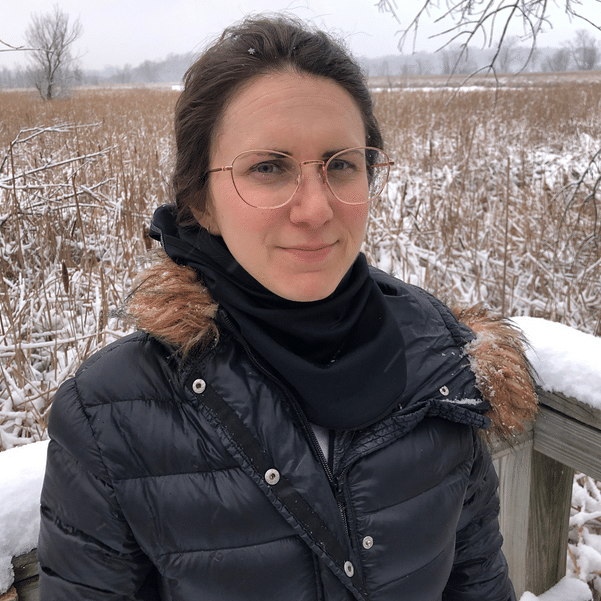
Sarah Silverman

Show/hide the video transcript
– Welcome, everybody. All 49 or 50 of you who are here, thank you so much for joining me. I am so excited to be celebrating the release of my book and I’m really grateful to you all for joining me. So, the first thing I wanna let you know is that if you wanna open the slides that I’m using, you can use the tinyurl.com/CM-slides and Dasha is also putting that in the chat. And, if through the course of our chat today you feel compelled to buy the book, I would love if you would. There’s also a link to order the book and the publisher, University of Oklahoma Press, was kind enough to give a discount code for 15% off that you could use, and I think it will be good for a couple of days if you are interested in ordering the book.
So, today what I’m gonna do is I’m gonna tell you a little bit about the origin story of this book and tell you a little bit about what’s in it and why I think you might enjoy it, so it’ll be kind of a little sneak peek inside. And then you all can ask me any questions that you’d like, and that will be it, it will be about half an hour. So, I am really excited to chat and celebrate the release of this book for you. This event will last about 30 minutes, just so you know what’s coming. I’ll talk for about 15 minutes and then we’ll have some Q&A. You can participate by using the chat to comment, ask questions, or converse with others. For a group of around 55 people, it might get a little bit chaotic, but that’s okay with me. Additionally, if you wanna take notes, reflect, or engage another way on your own, that’s great. And you are absolutely free to follow up with me after the event if you would like to. All my contact information is toward the end of the slideshow, including my real email address if you would like to email me at my real email address.
So, about me. Many of you are my friends or people that I have known through the world of educators, but I’ll just tell you a little bit about me since I don’t know everybody. So, my name is Sarah and she/her pronouns are good for me. Description of what’s in my Zoom box right now. I’m a white woman with short brown hair and I have metal glasses frames, today I’m wearing a white sweater and a couple gold chains, and I teach instructional design and disability studies. And I’ve also done faculty development support, any kind of work with faculty on teaching for about 10 years. When I finally changed that to 10 on my intro slide, started to feel really old, but I have actually reached 10 years of doing this work in some respect or another. And my own research interests include accessible and feminist pedagogy, Universal Design for Learning, or UDL, and the history of the neurodiversity movement which forms a big part of the book that I am celebrating today, so you will be hearing a tiny bit more about that. Okay, I always try to do gratitude upfront.
Before I’m gonna tell you what’s in the book, I’m gonna tell you who helped this book come to fruition because this is my first book and I needed a lot of help. I think no book is produced completely in isolation, but there are a few people that I especially want to thank. First, Jim Lang, who is one of the editors of the series and who was immeasurably helpful in all aspects of writing the book, visioning it and editing it. I certainly could not have done this without Jim, as well as Derek Krissoff and Andrew Berzanskis from University of Oklahoma Press. Andrew especially dealt with my concerns about the title and cover of this book with good humor, even though I was oddly specific about a lot of things. Also, there are a number of campuses I visited while I was writing this book and the groups that I met with there really helped me make progress on some of the ideas, so I specifically wanna acknowledge the groups at Goucher College, Davidson College, Wabash College, and the Grading Conference where I did a talk two years ago which really helped me work through one of the chapters in this book. So, super grateful for that. I wanna thank OneHE for hosting this book launch party. And of course, my community of educators, both in person and online, who have been such a source of support and also critical discussion, engagement, and an opportunity to grow my knowledge on this topic and develop the expertise that I needed to write this book. There are even people who are here today on the call who have written books that I reference in this book and who have really influenced my thinking so much, so I’m super grateful to all of you. And lastly, my family, my husband, daughter, parents, and siblings who provided a lot of support while I was writing this book and just in life. The picture you see of a four-year-old girl and an adult man in front of the US Open Stadium is my husband and daughter and they both love, well, we all love, but they specifically love playing and watching tennis and they did a lot of playing and watching tennis while I was writing this book, but this was taken just a few weeks ago at Family Day at the US Open in New York City, so that’s a fun memory and we have a lot of family pictures of watching tennis.
Okay, so now I’ll tell you a little bit about why this book came about in the first place. Because I, you know, some years ago started doing work on faculty development related to neurodiversity, I started receiving a lot of the same questions. Some of them were like, “Why does it seem like I’m hearing so much more about neurodiversity in higher education in the last few years or even just the last year?” Also people asking, “Is neurodiversity just updated or newer terminology for learning disabilities or autism?” Spoiler, no, it’s not just updated language, I’ll tell you a little bit more about that in a second. Or, “I have more and more neurodivergent students in my class but I don’t feel prepared to teach them.” Or even more specifically, “My usual plans for group work or requirements for class participation are not working well for neurodivergent students. What should I do?” So the last one represents a little bit more knowledge and awareness perhaps of neurodivergent students and their needs, but still a lot of question marks. I thought that I might like to write a book introducing people to the basics of neurodiversity from a higher-ed teaching perspective because of a combination of, I would say, four different experiences or areas of knowledge that I thought I could draw on. And they’re all interconnected, but I have been teaching disability studies for about five years now, and disability studies is an interdisciplinary field that deals with the social relevance of disability, disability history, and how we can use the lens of disability to interpret the world around us. And it focuses a lot on the first person narratives and perspectives of people with disabilities. And through that, I had researched and taught a lot about neurodiversity and the history of neurodiversity. I also wanted to draw on my experience doing faculty development related to teaching and instructional design. That’s been the bulk of my career that I’ve been doing for about 10 years. As well as my personal experience as a neurodivergent student first and then as staff and instructor, so I’ve inhabited most of the roles as a neurodivergent person in higher ed that might be relevant in this context. And then lastly, a little bit more recently, my experience doing guest facilitation on neurodiversity in higher education, which has given me the opportunity to hear really so many stories from instructors and students and to develop my knowledge base not only through looking through research or other books but also through real lived experiences. So, that’s a lot of what led to this book. In short, I wanted to help answer the question, what is neurodiversity anyway and why does it matter for me as a college instructor? And I hope I’ve come close to that goal. To give you a sneak peek of what’s inside the book, I’ll kind of tell you what each chapter is about in a very succinct way.
So, I have six ideas and there’s six chapters in the book, aside from the introduction and the conclusion. So, here’s the six ideas. Idea one is that understanding neurodiversity starts with understanding all of the terms that sometimes people have difficulty using or aren’t sure exactly what they mean. Idea two is that neurodiversity history shows us how to think about personhood before labels and how not all differences between people are necessarily pathological. Idea three is that neurodiversity and disability are partly overlapping but not equivalent concepts, and it’s worth understanding how they overlap and how they differ. Idea four is that our current educational systems do often prioritize normality and don’t make a lot of room for neurodiversity. Idea five is thinking about how we can go beyond just figuring out how to support neurodivergent students towards teaching in the neurodiversity paradigm or more broadly embracing neurodiversity in the way that we think about learning. And idea six as part of chapter six is recognizing some of the pressure points that neurodivergent people, including staff and students, might encounter in higher education and how we might release some of that pressure. So, I’ll tell you a little bit about each individually quickly.
So, the first idea is how understanding neurodiversity starts with understanding terms. If you read the first chapter of my book, you’ll learn all about the terms neurodivergent, neurodiversity and neurotypical, and how they do have evolving meanings and unique histories. So you’ll learn about the first usages of these terms online, how they were originally used and how they’ve evolved over time. You’ll also learn how they provide an alternative but not synonymous way to discuss cognitive differences to the medical diagnostic terminology like autism spectrum disorder, ADHD, dyslexia, et cetera. Overall, you’ll learn more about how they originated in the autistic community that emerged in the 1990s online when autistic people first began developing community and group consciousness, and you’ll learn a little bit more how educators who want to incorporate more discussion of neurodiversity into their teaching can start by understanding how to correctly use these terms in context.
Chapter two, big idea two, is about the history of the neurodiversity movement and how this can show us how to think about personhood before labels. More about how neurodiversity emerged from self-advocacy communities as a way to understand autism as not purely a disorder and this key insight from these communities that… Oops, sorry. Autistic people have both strengths and challenges when it had been previously conceptualized as only a disorder. This early activism involved pushing back on crisis narratives and dehumanizing language and pioneering the idea of acceptance and support versus cure. And you’ll learn a little bit about how in my practice as a teacher I’ve learned a lot from this shift in perspective from fixing students or colleagues to relating and supporting, and that’s very grounded in this history. Then we’ll learn a little bit more about how the later neurodiversity movement emerged to incorporate a whole range of experiences and how neurodivergence has always been an umbrella concept rather than one single set of issues or needs.
Idea three is about neurodiversity and disability, how they are partly overlapping but not entirely equivalent. Neurodiversity is an idea about cognitive variation and neurodivergence is the description of how some people’s cognitive traits do not align with contextual norms in society. However, disability is a much larger category which also has legal and policy implications in the educational context. So, many neurodivergent students and staff or faculty could be viewed as having a disability, but some may not disclose or document it. In this chapter, you’ll get a lot of details on why there may be increasing numbers of neurodivergent students, which models of disability align with a neurodiversity perspective, and you’ll also get some persona studies that help us understand disclosure considerations in higher ed, so you’ll get to meet some like composite personas of people and how they navigate talking about their neurodivergence with teachers and colleagues.
Idea four is about how our current educational system often does prioritize normality or adherence to certain cognitive norms and thinking about some responses. I worked through Jay Dolmage’s metaphor from his book “Academic Ableism” where we find many forms of “steep steps” for neurodivergent students in higher education or major barriers. These could include things like admissions procedures, assessment and grading, graduation requirements, and social expectations. And you’ll also learn about different existing responses that might fall into the categories of either retrofits or universal design with potential benefits associated with each. I get into a little bit also the retrofit of fee-based support programs for neurodivergent students and how these are proliferating really around the country and how they might in some ways be described as a retrofitting concept, but also some research evidence does point to them changing attitudes and systems more broadly on the campuses where they exist, so getting into a bit of that complexity.
The fifth idea is going beyond supporting neurodivergent students to teaching in the neurodiversity paradigm. That’s my concept for how we can respond to neurodiversity in our own teaching environments. I call it a practice of navigation and negotiation rather than a simple application of rules of what to do in any given situation. Some key ideas are that we can recognize the positives of cognitive variation even when they do create some conflict. We can exhibit humility about our own thought and communication. We can embrace tolerance for error, which is a component of universal design where there are not harsh consequences for misunderstandings or accidental uses of some tool. And we can expect and tactfully navigate access friction or conflicts of access needs when they emerge. Access friction is very common in neurodiverse classrooms involving instructors and students, especially because neurodiversity is not a single set of needs but a collection of these. Even in a room with all neurodivergent people, we’re likely to experience conflicts of access needs at some point. So being able to expect these and sensitively navigate them is a great set of skills, I think, for neurodiversity-aware educators. One of the thinkers that I quote in the book, Nick Walker, came up with the idea of neurocosmopolitanism. In the same sense that a person with a cosmopolitan attitude is interested and invested in learning about the different cultures of the world, Nick Walker suggests that someone who adopts a neurocosmopolitan attitude is interested in learning about all different cognitive styles and needs. So he writes that you might imagine a situation “in which it’s built into the curriculum that every person in the class, teachers and students alike, works at learning to comprehend and accommodate the neurocognitive styles and communication needs of every other person in the class as best they can. What if both the education of youth and adults and the training of educators included the explicit understanding that no neurocognitive style is more correct or normal than any other, and that the work of mutual accommodation is both an essential part of a proper education and an essential preparation for being a participating citizen in a civilized society?” I’ve always found this to be a really interesting concept that I explore further in this chapter, and if you’re interested more in learning about neurocosmopolitanism, you might be interested in that.
Our last idea is recognizing pressure points and potential pressure releases. I explore Margaret Price’s concept of kairotic space. This kind of forms the foundation of this chapter. These are the spaces in academia which are very high stakes, rapidly unfolding and highly social. They can be very challenging for neurodivergent students to navigate, and they can also be challenging to design when you have groups that contain both neurodivergent and neurotypical people. I suggest that pressure can be released by, first of all, surfacing access friction, acknowledging where it exists, providing a sort of ramp or a stepladder up to higher stakes activities instead of making the first activity the highest stakes one, and clarifying norms and social expectations with minimal judgment. Some examples of these pressure points that I explore further if you wanna look at case studies are labs, collaborative activities, and simulations, as well as class discussions and small seminars. So, in summary, why read this book? Any of these may appeal to you, maybe all of them do. I hope at least one does. Learn the histories and meanings of key terms related to neurodiversity and understand the main contributions of the neurodiversity movement and how they can inform teaching. Understand the intersection of disability and neurodiversity, including why some neurodivergent students and staff use accommodations and others don’t. You could consider what a teaching and learning environment could look like when we recognize that there’s not a single right way to think, and learn from some of my experiences as a teacher, faculty developer, and neurodivergent person in higher ed. I feel like I’ve been really privileged to meet so many different people who are working on issues related to neurodiversity in education, and all of that knowledge was poured into this book in various ways, so I’m excited to share it with all of you. Before we go onto questions, I’ll just say that you’re free to contact me at any of my contact methods, free to connect with me on LinkedIn if we’re not already connected. And if you would like to buy the book from the publisher, they’ve offered this discount code for 15% off today. So, with that, I’d love to go onto your questions. I’m really interested if you have any questions about the content or how this book might be different from other great books about neurodiversity, even authored by some people who are in the Zoom today, questions about where the conversation on neurodiversity in higher ed might be going next or anything else that you’d like to ask.
– I will ask a question, if that’s okay. What was the kind of the highlight for you writing the book?
– I think for me definitely one of the highlights was writing all of the composite personas and case studies. There’s a wealth of them that you’ll see throughout the book which are anonymized and stylized versions of real stories that I’ve heard from my colleagues and my travels around the country or just conversations with people I’ve done consultations with. And it’s almost always the best way to learn about a topic, I think, is to analyze a real situation in which it comes up and people have to navigate a complex situation together. So, I think that a lot of what you’ll find in the book might be case studies that are suitable for discussion with colleagues or coming back to as you build your knowledge.
– Thank you, that’s great. I love how you kind of drawn on so many people’s experience. It’s not just, you know, your book. It’s collective stories, it’s great. We do have a question in the Q&A, in the chat, so I’ll read it out to you. Irina is asking, “Could you recommend some resources to make academic integrity policy and practices more inclusive for neurodivergent students? Most academic integrity policies aren’t written with neurodivergent students in mind.”
– Yeah, so I actually think that this is somewhat of an emerging area of research. I actually did try to research it for my book and was not able to find that much about a year ago, but I think it’s starting to, the knowledge is starting to be built. I would say probably some of the biggest problem areas is differences of interpretation of language. So, one of the things that I’ve seen be successful in other areas that I think could be carried over to academic integrity policies is implementing like a clarification process of academic integrity policies to account for differences of interpretation and understanding. It’s quite common for somebody to write one written policy and make the assumption that everyone will interpret it, each word, each phrase, in the same way, and I think that’s often not the case. So, I’m really interested in creating interactive opportunities for clarification around these policies rather than kind of having someone sign one form or click a box when they enroll. I think that that could definitely go a long way. And there’s also one from Feli in the Q&A, “Great presentation, excited to read your book. Which parts of the book would lend themselves to become workshop or other resources for faculty?” Okay, yeah, that’s great. I would say that chapters three and six are very useful for faculty workshops, like I said, because they contain composite personas and case studies, which I think would be really useful. If you’re interested also in creating an overview of kind of how to discuss neurodiversity, how to use terms correctly, pretty much everything in the first chapter which discusses all the terms, how to use them and their histories would also be really useful. I think that possibly the content in chapters four and five might be a bit of a deep cut for an introductory workshop, but if you have a group of faculty that have been knowledgeable with neurodiversity and working on it for a while, that also might be useful.
– Thank you, Sarah. There’s a question in the chat. “Are online courses that are self-paced better for some neurodivergent, I guess, students?”
– Yeah, so, I’m really not totally sure. I think that there’s such a wide variety of experiences and needs among neurodivergent students that it would be difficult to make a blanket statement. I do know that I have worked with some neurodivergent students who have really enjoyed them and I do teach online self-paced courses from time to time and have had a lot of neurodivergent students who have had success. I think it really depends on the person, and there’s a lot of different formats that could meet different needs. I’ve also heard from some neurodivergent students that they enjoy having one or two asynchronous courses in their schedule to kind of create some breathing room if highly social or socially demanding face-to-face courses kind of max out some of their capacity with that. But it certainly varies by person.
– Okay, there is one more question in the Q&A. “I love the organization of chapters as ideas. When in the book’s development did you arrive at this idea?”
– Oh, okay, yeah. Well, I just overall got writing advice from, I think, a lot of good people that, you know, each chapter of your book should present at least one big idea or big argument. And what I really wanted to do was kind of take people from the main ideas or learning that I got out of all of my time researching and learning about neurodiversity history and understanding this concept from a lot of different angles, and then moving toward, okay, what does that actually mean for people who are in the classroom, or advising other staff roles or for students themselves. So, yeah, overall, it’s not that each chapter stands on its own, but you could read each chapter on its own and kind of get one important idea out of it, and I think that’s a nice way to set up a book.
– Great, well, on this note I would like to thank everyone for questions, for participating, for listening. We hope you got some good ideas out of Sarah’s six big ideas and you will get even more out of reading her book. We also have a course which we developed with Sarah that touches upon some of the kind of, the foundational knowledge, so if you would like to start there, I posted a link in the chat. And Sarah, thank you so much for your energy, for your time, and for sharing your expertise with all of us today. Thank you.
– Yeah, thank you, Dasha, and thank you to everybody who came. It was lovely to see all of you, if only your name, and please do feel free to contact me after if you have any reason to.
Sarah Silverman, an educator and independent faculty developer specialising in neurodiversity, disability studies, and inclusive instructional design, introduces her book ‘Classroom Mindscapes: An Introduction to Neurodiversity for Educators’. With campuses seeing greater numbers of neurodivergent students, and neurodivergence becoming a larger component of inclusive education, Sarah’s book offers a much-needed primer in the concept, terms, and history of neurodiversity for college faculty and staff, as well as a clear overview of its relationship to disability and its role and potential applications in higher education.
Download the webinar slides (.pptx, 6.1 MB)
OneHE content to explore:
- Foundations of Neurodiversity for Higher Education Instructors and Staff – course
- How to support neurodiverse students through Universal Design for Learning (UDL) – interview
- Universal Design for Learning (UDL): Making Learning Work for Every Student – course
- An Educator’s Guide to ADHD with Karen Costa – interview
DISCUSSION
What strategies have you found helpful for supporting neurodivergent students?
Please share your thoughts in the comments section below.