
Engaging Students through Philosophical Inquiry
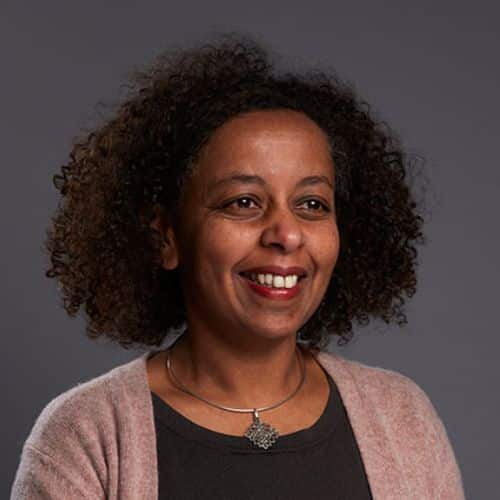
Fufy Demissie

Niya Bond
Click on this text to view the video transcript
– Hi, everyone. I’m Niya Bond, the Faculty Developer here at OneHE, and I’m excited to be with Fufy Demissie today, who’s going to be helping us think about fostering critical thinking and discussions. Fufy, thanks so much for being here.
– You’re welcome.
– Now, this is such a timely topic especially, well, for two reasons. In the States I know, we are experiencing a time where critical thinking is really important, and also I think around the world, the advent of AI has people worried about the demise of critical thinking. So I’m glad that we can be here today and learn from you on this topic.
– Sure, yeah.
– So tell us a little bit about how you got interested in this topic and why you’re passionate about it.
– Yeah, so my educational experience, I did my schooling experience in Ethiopia, so I had a very traditional didactic kind of learning experience, which I really didn’t like, but I didn’t know if there was another way of learning. So when I came to the UK and I attended university and, you know, I was exposed to different ways of learning. So I became really interested in that the discussion as a tool for learning and how you learn differently when you are, you know, talking and having dialogue with other people. So when I eventually did my doctorate, it was on the topic of students’ perceptions of learning through discussion and seminars in higher education in the university. And the reason I ended up doing that, another reason was that I found that actually, although these students were, grew up in the education system in this country, they weren’t very keen or able or confident to actually take part in a discussion. So, I was thinking, well, you know, obviously I have a good excuse. I didn’t, I had a very kind of traditional education, but you didn’t, you know, why aren’t you, you know, making the most out of this learning space because, you know, it offers so much more than just being passive and listening. So that was the kind of the starting point for my doctorate.
And I found that actually that the perceptions of that learning space were very kind of uncertain, a bit distrustful of lecturers to ask them to think for themselves and, you know, kind of reason and make judgements. So there’s a lot of work to be done, because students seem to come with that perception of we don’t know anything, that the lecturer, the tutor is going to tell us what we need to learn. So that’s the starting point. And then after that, because my background is a early childhood teacher. That’s how I got into all of this. So now my work in the university is about teaching future students, early childhood students. But as a result of that interest, I also came into encounter the approach called the Philosophy for Children approach, which is a pedagogical approach for promoting dialogue in the classroom using philosophy as a starting point. So that actually started in the States, Matthew Lipman, who was at Columbia University, he was a philosophy lecturer, but he actually got fed up with his students, think that actually, “This is too late, they gotta start learning to think way, way before.” So he devised the program for young children in schools. So I had two things at the same time. So I came across this pedagogy, and also I found my students are really uncertain. So basically I brought those two things together to develop my professional interest in fostering critical discussions in higher education.
– Amazing. It’s so interesting to think about the traditions, you know, that span from K through 12, as we call it here in the States, to higher education. And that just how pervasive we think we’ve come so far and we have, but still that, like, banking transactional model is so pervasive.
– [Fufy] So dominant. Yeah, yeah. Absolutely, yeah, yeah. So there’s a lot of work to be done, yeah.
– Now, in your research, or even now, did, you know, have learners expressed why they are reluctant to do? Is it because they don’t feel like they bring expertise or?
– Yes. So, knowledge, sort of the, they think they need a lot of knowledge to explore a topic. Oh, they do, of course they do. But, you know, but there’s a lot, there are a lot of experiences that they bring, particularly in a topic like ours, teacher education, you know, they have been pupils and you know, students, so they have a lot of rich sort of experiences that they can bring into it. But they, one of the, yeah, so one of the issues of the epistemological assumptions, which is another paper that I wrote, where they see the teacher as the fount of all knowledge. But also in a, I did a recent collaborative action research project with my fellow academics where we were using this pedagogy, into our teaching in a first year module. And what we kind of found was that it’s so complex actually facilitating classroom discussion in a way that actually gets the results that you want to get out of it, which is students thinking for themselves, reasoning, reflecting, possibly changing their minds, you know, reviewing their original positions, et cetera. But it actually also, one of the barriers seem to be the tutors themselves.
So particularly one of them was around actually our own assumptions and views about students. So we see them as in this deficit model that they can’t do this, they can’t do that, you know, they come from schools where nobody asks any questions, et cetera. But we found with our first year students, when we used this model of philosophical inquiry, a real surprise actually, that they were actually a lot more capable than we expected. And for me, that was really interesting, because in my early childhood educator background, we’re all familiar with the works of Piaget and Vygotsky and Piaget is the kind of what he left us with was that actually childrens can’t do, they can’t do abstract thinking because of the age, they’re restricted, you know? But obviously Vygotsky and others sort of, and afterwards came along and said, “Actually, no, if you actually change the context of learning, and if you provide the right learning environment, they are perfectly capable of doing abstract thinking.” So for me, it’s the same thing is actually I’m seeing in the first year students, they are capable, they have that facility to actually reflect and reason and think collaboratively, but the right conditions need to be there. So that’s what I was gonna say as the takeaway message at the end. But you know, I’ll say it now, I’ll repeat it at the end as well.
– [Niya] Oh, good, yeah.
– So the barriers are not just the students, I think it’s also the educators as well.
– Yeah, that makes sense. Now you mentioned a few times the right environment and that sometimes, you know, you have to be really intentional. It’s not necessarily easy to establish that. So what are some strategies that you’ve discovered work?
– Yeah, yeah, yeah. So the nice thing about the methodology that Matthew Lipman developed is a very clear structure of how to go about this, you know, creating this environment. So there’s a game there, it’s like a game, and there are rules to that game doing this kind of interaction. So the rules have to be very explicit to the students, and also understood by the educator as well. So there’s a shared understanding of the rules. So the rules, if you like, in quotation marks, in that pedagogy are that it’s, the main aim is to create a community of inquiry, is the community, creation of that community. And the community is created by having ground rules at the beginning and always having some kind of icebreaker activity. So it’s kind of, people are relaxed to engage in this context, but the key elements of it are what are called the Four Cs.
So in a community of inquiry where people are reflecting and discussing kind of topics, there needs to be a balance of the effective dimension of thinking, like caring thinking, collaborative thinking, and also the critical side, the critical thinking and creative thinking. So a good community of inquiry where people feel like they can talk and, like, kind of open up to others is where they know this is a priority for this setup. And the facilitator is always trying to balance the four modes of thinking. So it’s no good having a really lovely kind of environment, but if everybody agrees all the time, and on the other hand, it’s no point if people are like really questioning and challenging if people are feeling threatened by that. So this is kind of the method of this approach is really is about recognizing, knowing these four ways of thinking and also trying to balance them in that discussion. So, that’s, I think for me, that’s what makes people open up because they trust the process, essentially.
– Yeah. Well, and it makes sense to me to kind of start with, you said that affective or caring element, and then you can move maybe into positive challenge and creativity once you’ve got that, like, baseline trust belonging.
– [Fufy] Exactly, yes. That’s what it is.
– Now it sounds like though it’s not a one and done, it sounds like this might have to be scaffolded and, like, repeated.
– Absolute. Oh, all the time. So, for example, once at the end of an inquiry, the facilitator will get them to reflect to what extent actually we’ll be doing critical thinking, what extent will be doing pairing or collaborative and you know, so one that we want to work on next time, do we wanna be a bit more critical, you know, using some of these kind of thinking moves, like asking for reason, questioning assumptions, et cetera. So it’s an ongoing process all the time. Yeah, yeah.
– Now, for someone who maybe is learning about this from you right now for the first time, but is really interested in starting somehow, what do you recommend? Where should they begin?
– Well, I would sort of say that it requires a little bit of training, unfortunately. The course that I did for OneHE is kind of a very kind of condensed version of this, really focusing on specific activities educators can do. But it doesn’t have that kind of background to the process I’m describing right now, which is called the community philosophical inquiry, or the Philosophy for Children pedagogy. So Montclair University has, I think that’s not, probably not too far from you, but they have got an amazing resource of, because that’s where Matthew Lipman developed his ideas. So they still carry on with his work and tradition. So they’ve got a huge amount of kind of, you know, resources for people to look at. What they might find is that the Montclair stuff is based on for children, but actually what I found from my work is actually it works equally well for adults and students. So, but without going there, what would one somebody do who wanted to engage in this kind of way of working. I suppose the most fundamental thing, like you say, is that building that trust, getting people to trust that the system and that belonging is the starting point for people to take risks in their thinking.
So another thing that we do is we often regularly sit in a circle when we’re doing a philosophical inquiry, because that’s part of building trust and kind of a sense of belonging. So there are clear steps once the ground rules are established about how do we wanna be in this space? Do we, you know, what’s okay, what’s not okay to do? And then there’s always a stimulus that the facilitator presents. It could be a reading for the class that they’ve done before, or they will do in the future. It could be an image, it could be an artifact, it could be an incident that’s happened. Anything that is provocative and is contestable, like people, it provokes something and then they might hate it or they might love it, but it actually makes them wanna kind of do something about it. You know what I mean? To kind of talk about it. So this is a stimulus and then the the group is invited to generate some questions based on that. So it’s very much owned by the students. They own the questions.
– [Niya] Yeah, sounds very learner-centered, yeah.
– Yeah. Very much, so they propose questions in groups or whatever, and then they vote for one question. So it’s quite democratic as well. Yeah, so they vote for one question, and not everyone will vote for that question, but the majority vote for it, then it’s because there’s ownership as well to that question. So once that question, and then the rest of it is trying to address that question, respond to it from lots of different perspectives. And so the role of the facilitator is to actually challenge a little bit and say, you know, “Does everyone agree? And, you know, does anybody got an example or a counter example?”, or whatever. So, that’s the role of that facilitator. And at the end they go back to their original question and then the facilitator asks them, you know, “Has anybody changed their mind or any feed, you know, comments on this?” So it’s kind of quite a neat process. It can be used at the beginning to explore students’ thinking, or it could be used at the end of even the module or the, once they have done all the reading all the discussion and everything as a way of kind of elevating it, if you like, a little bit more what they’ve learned for that module. So in some ways it’s quite easy that very clear instructions, but the hard bit is creating that environment of trust.
– Yeah. Well, and it’s great that it’s flexible, like you just said. It can help at different points in the learning process. One other thing I heard you talk about, in addition to that caring and belonging foundation, it sounds like is real transparency about the process the whole way through. Like, why is it happening? Why is it meaningful? Yeah.
– Yeah, they know that, that’s the key thing. They know what’s coming, what’s happening and why it’s happening. So that’s part of the training, or kind of support the students need is that they know what it is and what’s happening, why it’s happening. So again, that kind of immediately creates that sense of trust that nothing’s gonna be sprung upon them, that they didn’t know. So what I’ve found often in the past is that when we set our ground rules, often they suggest a ground rule. You don’t have to speak if you don’t want to. And because it’s a very open, democratic person, you can’t say, “No, we can’t have that.” You can’t say that. So you have to kind of acknowledge and write it down, and what I often find is that the people who say that suggest that rule often end up talking the most at the end. It’s just really strange, because it’s almost like it’s giving them permission. They’re talking because they want to, not because they think they have to. And it just sort of really surprising kind of outcomes of that rule that you think, “Nobody’s gonna speak then, you know, we’re not going to have a discussion.” But actually it doesn’t work that way always, yeah.
– Yeah. Well, it almost seems like a safeguard. Like, they know they have the option, so they’re protected in a way, but that makes it freer to engage.
– Yeah, take more risks. If I’ve got a nice harness, I’m going to jump outta that plane, you know, fine. You know, but yeah, so it’s very, it’s kind of a combination of sociocultural perspectives and also humanist perspectives as well, all kind of intertwined in there, but really the base of that is that ownership and safety and belonging. And often you start with this kind of elaborate process at the beginning, and I think it’s important to do that at the beginning, but then often then it starts becoming part, because they know what you’re doing, what you’re trying to do, even when you’re not doing it formally, I found that they start talking in that way and start interacting in that way. And now it’s like, wow, mind-blowing.
– Positive ripple effects sounds very impactful. Well, we always like to leave the last word to our expert, so don’t wanna put you on the spot, but anything you wanna say to our community, including just a nod to your course, which is an excellent accompaniment to this interview.
– Yeah, yeah. So, yeah. So last thoughts I think I would say is really having that trust in the students, letting them know that you trust them, that they can do this, you know, they’re capable of this, and then actually challenging them, you know, but challenge or trust is different from just challenge without trust and belonging. So I think for me, this approach is balanced – it’s effective and the cognitive side beautifully so that, you know, you get the best out of your students. So we don’t dumb down then, because we don’t think they can do it. So I would really recommend that you have a look at the Montclair University website, what they say about the Philosophy for Children program. And in the UK, we’ve got an organization called SAPERE, S-A-P-E-R-E, which does an equivalent kind of work. They’ve got lots of resources on their websites that you might kind of give, you might give you that spark. You might even do one of their online courses. Hey, there you go. Yeah, I could do one of their online courses. I’m one of their official trainers, so yeah, so you could do one of the introductory or level one courses, which would, I’ll say to people, if you really care about this, you know, you probably will think, “I want to know more about this. I want to that classroom discussion to thrive and develop and to build on it.” So yeah, so I’d say look at those two websites and, you know, don’t be afraid to throw in a five minute, what we call philosophical exercises in the middle of your teaching.
So, but for that, you need to be aware what are the juicy concepts in what you’re teaching. And the juicy concept is one that is contestable, is important to talk about, and is connected to the students’ interests and experiences. So once you kind of identify a juicy concept, then you can use this kind of questioning thing. Our students care about teaching, because they’re learning to be teachers. So one of the philosophical exercises that I throw in sometimes is, should AI replace teachers? So that gets them going, because they really wanna talk about it. It is contestable, you know, and then they start offering opinions and suggestions and then you can kind of challenge them, question them, say, you know, is that always true? Sometimes, you know, is it always great to have a real life teacher? Is, are there conditions when, you know, actually AI might do a better job, et cetera. So you can get to kind of think and reason and reflect. So by the end of it, they have a more rounded insight into that question and they know when they think it’s okay, they have a better understanding when they think it’s not okay. So these philosophical exercises really don’t take any time, five minutes, identify your concepts and formulate a kind of challenging, you know, question about yes or no, agree to agree. You know, people do that already in their teaching, but it’s about, the philosophical side is about hanging onto a really juicy contestable concepts and trusting the students.
– I love ending with trusting the students.
– Yeah, yeah, yeah. We’ve got to, we’ve got to. Absolutely, yeah.
– Well, I wanna thank you so much for your time. This has been informative and inspirational. I’m really inspired by everything that you’ve said here.
– Oh, thank you very much, thank you. Thanks, Niya.
In this video Niya Bond, OneHE Faculty Developer, talks to Fufy Demissie, Senior Lecturer in Early Years Education at Sheffield Hallam University, UK. Fufy explains what the Community of Philosophical Inquiry framework is and how it can be applied in a higher education classroom to support engaging discussions with students.
Small steps you can take to apply the Community of Philosophical Inquiry framework in your teaching and learning setting:
- Use an icebreaker to build community and set the tone for open dialogue.
- Establish ground rules collaboratively with students to foster respectful discussion.
- Present a stimulus (e.g., a thought-provoking story, scenario, video, article, book chapter, or podcast).
- Pose a guiding question that introduces a philosophical dilemma or reasoning challenge.
- Let students discuss in groups.
- Encourage reflection and self-correction by asking questions like:
- What have you understood now that we didn’t before?
- Are you building on each other’s ideas?
- Are you considering different perspectives?
- Avoid pushing for ‘final answers’ but encourage progress in reasoning. You could pause the discussion to summarise key points and ask, “What have we learned so far?”
- Close with reflection by asking students how their perspectives evolved and what questions are still open.
Learn more from Fufy’s course: Fostering Critical Thinking In Discussions
Useful resources:
- Montclair State University resource, USA.
- Sapere/Thoughtful, the Society for Philosophical Enquiry, UK.
References:
- Frostenzer, J., Demissie, F. & Boontinand, V., (Eds). (2024). The Pedagogy of the Community of Philosophical Enquiry as Citizenship Education: Global Perspectives on Talking Democracy Into Action. London: Routledge
- Haynes, J. (2008). Children as Philosophers: Learning Through Enquiry and Dialogue in the Primary Classroom. Routledge.
- Lipman, M. (2003). Thinking in Education. Cambridge University Press.
- Perron, J. D. (1979). Review of “Children’s Minds”. [Review of Children’s Minds, by M. Donaldson]. Research in the Teaching of English, 13(4), 353–356.
DISCUSSION
How do you structure discussions with students to encourage critical thinking?
Please share your comments in the discussion section below.