

Designing and Facilitating Workshops with Intentionality

Niya Bond
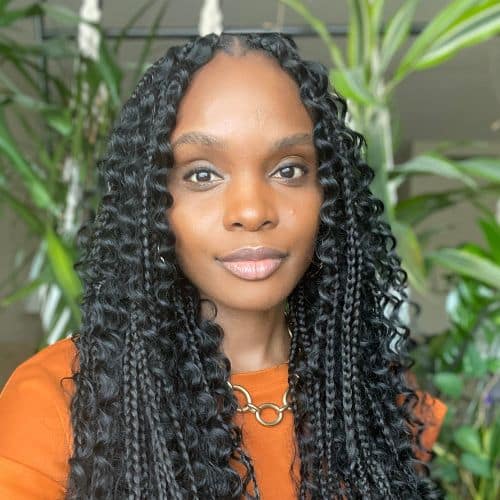
Tolulope Noah
Click here to open or close the video transcript
– Hi, everyone. I’m Niya Bond, the Faculty Developer here at OneHE, and I’m so excited to be joined today by Tolu Noah. Tolu has just published a book amongst many other accolades, “Designing and Facilitating Workshops with Intentionality.” And intentionality is one of my favorite teaching words and something we talk about a lot at OneHE. So I’m really excited to get your take on this topic and that element of it specifically. So welcome. Will you tell the community a little bit about yourself?
– Yeah, so my name is Tolu Noah and I currently work as an educational developer. My formal title is Instructional Learning Spaces Coordinator at California State University, Long Beach. And in this role, I primarily design and facilitate professional learning programs for instructors about teaching and technology. I also was an educator- actually, I would consider myself always an educator- but formally in the classroom as a teacher education professor, and also was a K-12 teacher prior to that. And I also had some experience in corporate edtech at Apple.
– Okay. And how did your interests in this topic come about and how did that lead to a formal book?
– Yeah, so I have always enjoyed professional learning. I nerd out on learning about teaching and learning. And so anytime I have the chance to actually attend another professional learning event, I’m like, “I’m gonna be there.” And so as I was doing more of that in my own work, that passion continued to grow- that passion for actually helping other educators explore their practices and consider, you know, how they could take what they were learning back to the classroom. And so I think that passion was always there, but the actual inspiration to write the book came from two different sources. One was an invitation that I received to do a three-hour workshop about how to design workshops for adult learners. And that was the first time that I was doing more of that kind of meta, behind-the-scenes type of session about all the different things that go into designing and facilitating learning. And so that was a really exciting opportunity. And around the same time, I also got to write an article for “EDUCAUSE Review” about how to design and facilitate virtual workshops really well. And so the responses that I got to both that three-hour workshop that I did and the article that I wrote really showed me that there’s this interest in learning more about how to design and facilitate workshops well. And so I was like, “Okay, I think there’s something here. Like, I’m incredibly passionate about this. There seems to be interest from other people learning how to do this. There’s this great intersection. I think this is the thing to go with.” And the other thing that inspired me about this book is that I could bring everything, like all of me, to this work, if that makes sense. So my passion for professional learning, but then also my experience in the classroom having taught directly influenced the ideas that I share in the book too.
– I love that. And of course, we want everyone to read your book, but we’ll give them a little snippet. You have 10 essential principles in there that you talk about amongst like frameworks and other contextual information. But what were the things that were really important to you that you included that you think people should consider when wanting to be intentional about facilitating these events?
– Yeah, and there’s so much I could say for this, but I’ll try to keep it brief. So I guess I’ll give a little bit of context about the principles that you just mentioned. So I have a model in my book that I call the Workshop Wheel, and it highlights 10 different principles for intentional workshop design and facilitation. So everything from thinking about how we can design it to be a relevant experience to an active experience, to a reflective experience, lots of different things like that. So I definitely won’t go into the weeds today, but a few kind of key ideas that I want to share is, first of all, when we are designing and facilitating workshops, we want to be thinking about how we can break up the session. I don’t know about you, but I’ve been in plenty of sessions where it’s labeled as a workshop and we come in, but most of the time is spent listening to the person at the front of the room speaking. And so we really want to think about how can we break up the content of our workshop so that there are opportunities for participants to engage throughout. And so a helpful tip that I got from the book “Training from the Back of the Room” by Sharon Bowman is using what she calls the 10-minute rule, where you try to limit times that you are talking to people or modeling information to about 10 minutes at a time before you give participants opportunities to actively engage. So that might be doing a poll or a discussion or a case study analysis, but we really want to make sure that there are those frequent opportunities for participants to do something during the session.
And I would add to that, that, you know, when we think about workshops, we want to think about how we can also create space for participants to actually do the work of the session during the session. And so if we’re, you know, designing a workshop about how to create inclusive syllabi, for example, how can we create space in the session for participants to actually do that work of looking back at their syllabus, making revisions, things like that, instead of it being something that they have to find time to do after the fact. So that would be one tip that I would share. Another tip would be to anticipate barriers. So as we’re designing and facilitating workshops, thinking ahead about the potential challenges or barriers that participants might experience and how we can address those. And so this can be barriers related to accessibility or even the terminology that we’re going to be using. If we think about those things from the start, then we can intentionally address those things and create a better learning experience for our participants. And then the third thing that I’ll share for now is really thinking intentionally about how we can cultivate connection in our workshops. So something that I love about workshops is that- and I talk about this in my working definition of the term-is that workshops should be spaces of multi-directional learning where everyone has the opportunity to learn from each other. And so how can we actually create space for that to happen? And one way that we can do that is being really intentional in our design of those interactive opportunities for participants. And so something that I found really helpful in my own work is leveraging protocols as a tool for structuring those interactions. And there are lots of different sources for protocols. One of my favorites is the Center for Leadership and Educational Equity. They have, I think, over a hundred different protocols that can be used for structuring brainstorms and feedback and coaching sessions and discussions. Another great source is Liberating Structures. And so, you know, selecting a protocol that can be helpful in structuring an interaction in your workshop can be really helpful in making sure that all voices can contribute to the conversation and everyone has an opportunity to learn from each other. So those are, I guess, three ideas I’ll share for now.
– Well, I love all of those. And you know, we keep saying intentionality, but it’s there in each element, right? Like the pre-planning, the actual implementation- I imagine there’s even potentially stuff about kind of reflecting on the experience and learning from it.
– Yeah, I have a whole chapter on reflection. And it’s funny, like reflection is something that I was also really passionate about when I was a teacher. Like, there’s something really special that happens when you pause and give people the chance to just synthesize what they’ve learned and consider what they’re going to do with it moving forward. And this is something that Priya Parker also talks about in her book, “The Art of Gathering,” where we want to create space for what she calls “looking inward,” where we’re kind of reflecting on what we learned and what happened during the experience, and then “turning outward,” where we’re thinking about how we’re going to take what we learned with us back into the world. And so when designing workshops, I always include, you know, lots of intentional reflection opportunities throughout the sessions to kind of process what’s happening, but then also formally at the end as a way of thinking about, “Okay, what are the key things that I learned in this session? What do I actually want to do with this moving forward?” And so I think those reflective opportunities are critical for sure.
– Yeah. And I know we’re talking about workshops, but you know, you are always an educator, and so I keep thinking just about how relevant this is to classroom practice, whether you’re online, whether you’re onsite. Like, these are all things that you want to be doing to facilitate meaningful learning, interaction, and connection in so many different spaces and places. So it’s so important, you know, that you’ve shared these tips and strategies. Well, we always like to leave our expert with the final word. Is there any one tip or strategy that you recommend for either someone who wants to take a meaningful workshop or someone who wants to host one?
– So a final thought that I would share is when you’re designing any type of learning experience, you want to make sure that it aligns with who you are. This is something else that I talk about in the book, is that there’s no one right way to design a learning experience, whether it’s a workshop or a class session. And we need to think about the personhood that we bring to this work in terms of our identity, in terms of our values, in terms of our beliefs, in terms of our prior experiences. All of those things will shape our approach to doing this work. And so I would encourage you to lean into who you are as a facilitator of learning, whatever that might mean, and use approaches that align with who you are instead of feeling like you have to, you know, copy or mimic what other people are doing, because that authenticity is what’s going to help people connect with you and what’s going to help make that experience even more meaningful for your participants.
– I love that. And I’m just going to keep going back to the word, but authenticity is another form of intentionality, right? And I love that final connection. Well, Tolu, really quick, tell everyone where they can get your book.
– Yeah, so my book is available at all major retailers. It was published by Routledge. You can go to the Routledge website and find it there, but it’s also available on Amazon and Bookshop and Barnes & Noble and any other place where you would find your books. So yeah.
– Wonderful. And I do just want to mention that you’re a participant in some podcasts, so people can look out for that too if they want more context about the book.
– So I’ve been on several other podcasts, including “Teaching in Higher Ed,” “Tea for Teaching,” and “Think UDL,” and a few others are in the works currently.
– Amazing. Well, I look forward to learning even more when I listen to those episodes and hope to get to chat with you again in the OneHE community.
– Awesome. Thank you so much for having me. It was great chatting with you. And if anyone else would like to reach out and converse more about the topics in the book, I’m happy to chat.
– Wonderful. Thank you so much.
– Thank you.
In this video, Niya Bond, Faculty Developer at OneHE, speaks with Tolulope (Tolu) Noah, Instructional Learning Spaces Coordinator at California State University, Long Beach, about her book Designing and Facilitating Workshops with Intentionality: A Guide to Crafting Engaging Professional Learning Experiences in Higher Education. The book offers practical guidance, tools, and resources to assist practitioners in creating effective, engaging workshops for adult learners.
In the interview, Tolu shares key insights and practical takeaways from her book, offering tips on how to design with purpose, foster active participation, and creating space for meaningful engagement during workshops. To learn more about the book, you can read an excerpt from the Introduction chapter below and visit Tolu’s website.
Useful resources:
- Noah, T. (2025). Designing and Facilitating Workshops with Intentionality: A Guide to Crafting Engaging Professional Learning Experiences in Higher Education. Routledge.
- Parker, P. (2018). The art of gathering: How we meet and why it matters. Riverhead Books.
- CLEE: Center for Leadership & Educational Equity Resource and Protocol Library
- Liberating Structures
DISCUSSION
What are your favourite tips or tricks for designing and facilitating workshops that actively engage participants?
Please share your thoughts in the comments section below.