
Making Writing Meaningful: A Chat with Anne Ellen Geller
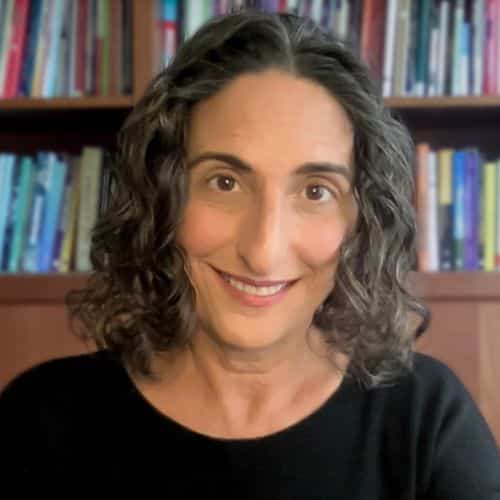
Anne Ellen Geller
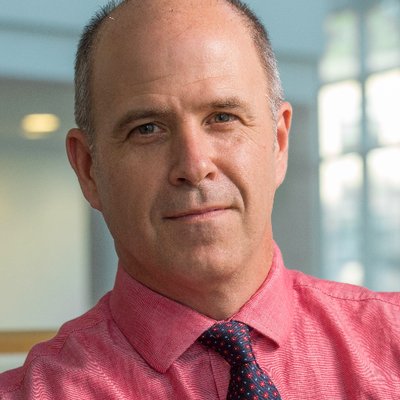
James M. Lang

Click here to open or close the video transcript
– So, welcome, Anne. I’m looking forward to talking to you about this new book you have on meaningful writing. And I know this book comes from a larger research project that you’ve conducted with a couple other folks, and then you wrote a first book about that called “The Meaningful Writing Project.” And this new book emerges from that larger project and that book. So, tell us about that whole sort of overview of where this new book comes from.
– So I’ll try to do a short version of a lot of years, and you can ask some follow-up questions if you want. In about 2011, 2012, maybe even 2010, Neal Lerner, Michele Eodice, and I started thinking about students’ meaningful writing experiences. And we knew we wanted to plan a research project where we talked with students, we heard students, really, talking about the writing they were doing. And there’s always lots of talk about what we, faculty, administrators, think students are writing or how we think they think about writing, but we wanted to be sure we had students’ voices. So, what was really great about that first project is we were awarded a research grant from the Conference on College Composition and Communication, the national writing organization. International, I guess. And so we were able to include undergraduates as part of our research team. So we had a couple of layers of that first research in 2012. We knew we wanted to ask seniors to think back on all of their writing in higher education. So we surveyed seniors at our three institutions, which is St. John’s University in Queens, New York, Northeastern in Boston, and University of Oklahoma. Three very different kinds of universities. We surveyed students, and at the heart of that survey, we asked them, “What was your most meaningful writing project?” And we asked them, “What made it meaningful for you?” And then we might go into this detail, we might not, we had undergraduates on our research teams interview some students who said they would be interviewed. We actually added in a survey for faculty who were named as assigning those meaningful writing projects.
And our undergraduate research teams interviewed the faculty about why they thought that their projects had been cited as meaningful. And we published a number of articles from that research. They’re available googling with my name. Most of them are on the St. John’s website. And a first book called “The Meaningful Writing Project.” And that project, I think, has been… That book has been widely read by faculty across the disciplines. Thank you for reading it and writing about it. But we always imagined that book as speaking more to writing studies. And so we always knew that we wanted to take everything we were learning and really write a book that any faculty person could pick up and easily think about. And so, when we decided to resurvey students, we had hoped to do that in 2020 but we all know what happened in 2020, so we did not do that survey in the spring of 2020. We pushed it to the spring of 2021, which we were happy about, right, because that captured students’ experiences during COVID. We added some new questions and we kept very similar questions. “What was your meaningful writing project?” “What made it meaningful?” But we also added a really important new question, which was, “If you could speak directly to faculty and tell them what they could be doing to support meaningful writing, what would you say?” And the new book, “Making Writing Meaningful: A Guide for Higher Education,” is really built from what students told us in the answer to that question.
– That’s great. And the fact that the subtitle says “A Guide for Higher Education,” not just for writing instructors, right? So you wanted to be open to anyone who teaches writing in any way, in any discipline, right?
– Yes. And in any discipline, in any program, in any pre-professional program. And honestly, we also think of people like librarians often teaching writing, or student development folks often teach writing through mentoring student groups.
– Yeah, as you’re describing the book, again, I’m reminding myself how intrigued I was by the core conception of it. You know, just ask students, “What was the most meaningful piece of writing that you ever did?” and then what we can learn from that. So I just remind myself, yes, this is a great project. Now, the project itself and then the first book and now the second book also.
– [Anne] Thank you.
– Of course now, a year after you did the survey, GenAI, generative artificial intelligence, came out. So tell me how that sort of impacted your thinking about what makes a piece of writing meaningful?
– Yeah. Yeah. So, I’ve been thinking about this, and it’s that time right after the semester ends where we all think about this semester. And I think you’ll find this familiar and other people will. I think I might’ve had one of those semesters where I learned more from my students than they might’ve. You know, which is not true, right? They learned plenty. But I just learned a lot from my students this semester. So, I think I want to answer that talking about some of the things I learned from my students about AI and what the book is thinking.
– Yeah, I agree. Yeah.
– So, my students, one class in particular I had write anonymously about how they were using AI. And I was really struck by some of the things they wanted to talk about. They wanted to talk about using it when they have to do something that they just feel is a task, right? And we write about this in the book, from students’ perspective, as busy work, or the most transactional of assignments. Like, you asked me to do something sort of to prove that I read it, and so I give it back to you. And we both know that’s all that it’s doing as a writing assignment. So, those two things from what we learned in the book and what my students taught me, I’m thinking about. I’m thinking about how my students talked about using AI when they really felt like they didn’t know enough and that they didn’t have access to… The professor wasn’t really explaining something well or couldn’t really say what they wanted in the writing or the genre, so they asked AI questions like, “What’s a white paper?” or, “What am I missing in a lab report?” And that makes me think about how students told us that they really want to have relationships with their faculty around their writing. They want to have connection and have faculty working together with them in their writing. And sometimes I think we’ve moved so to writing in the disciplines and drafts that we forgot that we can do a million little pieces of writing with students to help them trust us that we’re reading it, that we’re responding to it, that we’re teaching them parts of things, right? The classic scaffolding. In one response that we include in this book, a student wrote, “Students. Love. Scaffolding.”
– That’s awesome.
– That was the response in the, “What do faculty need to know? And then, finally, you know, we all know the way the world is right now. It’s difficult for us, for faculty, for a whole ton of reasons we don’t have time to talk about. It’s difficult for us as people. It’s difficult for students. And my students talked about wanting to feel human in their writing, you know? And they talked about how so many assignments and transactions don’t allow them to bring their humanness. That’s something we’ve thought about and written about and heard students talk about as “the personal,” which is not really a personal story or that I’m going to reveal something to you. It’s that students want to write about things they care about and build connections between your class and my class and the world and things they care about. And so this is my long way of saying that I think everything we write about in this book, which is that students want to build connections around writing with us, with each other, students want their writing to be consequential and mean something in the world, and students want to have choice and be able… Not full choice. Not like I get to write about anything I want. But they want to take what they’re learning with us and be able to connect that outside the classroom and to their histories and to the way they live and they’re experiencing things. And I think if we can help students understand that we can support their writing to do all those things and that they have agency as writers, then we can think about, like, when do we want to use AI as a tool. But we can stop thinking about we need to surveil their use of AI or we need to refuse AI, or we need to…
– Right. So we go to our values first and what really matters about piece of writing, what makes writing meaningful, how do we learn from writing. Think about tho those things first, and then we identify where GenAI might be helpful or not helpful in the process.
– And also think about why are we asking students to write in our classes. We have a chapter called “Why Ask Students to Write?” And if we can’t say to students, “You’re writing right now for this reason having to do with your learning, or having to do with who you’re going to be in the future, who you want to be,” then I think they will see it as just transactional. So, why are we valuing writing?
– Good question. So let me sort of finish here by saying, let’s say I’m a faculty member in a non-writing discipline, and maybe I’ve used writing for this or that and looking at it now I see it’s more transactional, so how do I get started making it more of like a meaningful writing? Not only necessarily a project, but a meaningful writing approach in a non-writing discipline or course.
– Yeah. We have a set of questions in our final chapter that we’ve sometimes talked about as the meaningful makeover. Like, “What kind of questions can I ask about the writing I’ve been assigning, and how I’ve been experiencing it reading it, and how my students have been experiencing it?” But I think students offer us some real specifics. So, one thing we heard from students is that during the pandemic, and a lot of meaningful writing projects got written during the pandemic time online, in online classes, we saw a kind of noticeable rise in reflective writing. And we don’t know why that is. We have some guesses. Maybe faculty were giving students more space to reflect, or that was the kind of writing that worked better online. But students really appreciated it. So, that’s one piece of advice I’d give, is where in your course have you maybe not been using reflective writing? And that could be anything from the kinds of quick things that we know to do in class, like “what did you learn today” or “what are you confused about” kind of reflective writing to bigger things. Like, how is the content we’re learning in this class changing your thinking about the world. And I’ve really seen that students want to be hearing from one another. So, I don’t think it matters if it’s a government class or a nursing class or a chemistry class. You know, that kind of expansive view of how can you take your learning out of the bounds of this class and think about what it means for you and the world in writing, and who would you present that to. So, reflective writing is one. Another is choice. Students said, “We want choice. We want choice, We want structure. We want requirements. But within that, we want some choice.” So I know this is a hard one, this can be a hard one for me, but do you really have to have every single student meeting the assignment with exactly the same genre?
– Right. Right.
– Could you meet the learning goals for the composing or writing you’re doing? And one person writes a letter and uses sources, and another person develops an infographic and some explanatory text and works through the same material. So, that kind of choice. Let’s talk about that scaffolding idea.
– [James] Yeah.
– And also feedback. A student wrote, “Meaningful feedback is everything.” And when we write about students understanding that writing can be consequential, and students saying they really appreciate writing that’s consequential, they often put that in contrast to writing that only has consequences. So, you know, “Your grammar is wrong,” “You don’t have the right number of pages,” you know, in an online age. “You didn’t staple it” and all of those kinds of things. So, what does it mean to imagine a scaffolded set of work that I as the faculty person can see builds to something, students can see builds to something. They’re learning from me about content and writing, they’re learning from each other about content and writing, and they’re building something, and they’re learning about themselves as writers and the feedback is meaningful and positive and engaged. And that doesn’t mean it’s critical. Right? Sometimes my most positive, and I’m sure yours, you know, I work really hard on giving something really positive so I can also offer something that really needs to be rethought or revised. And I think students told us they really love that. They feel that much more engaged.
– That’s great. I love the difference between consequences and consequential, right? So, the consequential part is most important to you. It should feel consequential to them, meaningful to them. These are great ideas and I think the idea of having a meaningful writing makeover in a class, people can get that from the book, more ideas, concrete ideas about how to do this, to bring these ideas to life. And I would also say the book is short and readable, so it’s a great way to… People can dive right in and take away some good ideas for the upcoming semester and going forward for writing in their own courses, whatever discipline they’re in.
– Yes, definitely.
– All right. Thanks for joining me today.
– [Anne] Thank you.
In this video, James M. Lang, Professor of Practice at the University of Notre Dame, USA, talks with Anne Ellen Geller, Professor of English at St. John’s University, USA, about the book she co-authored, Making Writing Meaningful: A Guide for Higher Education.
Anne shares practical strategies from the book and reflects on how it was shaped with and by students. Their conversation explores ways to design writing tasks that connect with students’ interests, experiences, and goals, helping them see writing as a meaningful part of their learning journey.
Here are three key takeaways from the interview:
- Build in reflection by including quick in-class prompts (“What’s one idea from today’s session you’ll take forward?”) or short written responses that help students link course content to their own experiences and the wider world. Reflection helps students see writing as part of their personal and intellectual growth.
- Ask yourself ‘Why I am asking students to write?’. Offer choice within structure by keeping your learning goals clear and allowing flexibility in how students meet them (e.g., essay, infographic, a letter, podcast script).
- Scaffold with purposeful feedback by breaking big assignments into smaller steps, each with opportunities for feedback that is specific and encouraging. Students value feedback that helps them improve, not just meet requirements. Scaffolding shows them the purpose behind each stage and keeps the process engaging.
Learn More:
- Download Chapter 1 of Making Writing Meaningful: A Guide for Higher Education
- Meaningful Writing Project website
References
- Eodice, M., Geller, A. E., & Lerner, N. (2025). Making Writing Meaningful: A Guide for Higher Education. University of Oklahoma Press.
- Eodice, M., Geller, A. E., & Lerner, N. (2016). The Meaningful Writing Project: Learning, Teaching, and Writing in Higher Education. University Press of Colorado, Utah State University Press.
DISCUSSION
What’s one way you already make writing tasks meaningful for students, and how could you build on that?
Please share your thoughts in the comments section below.