
The Opposite of Cheating: An Interview with David A. Rettinger
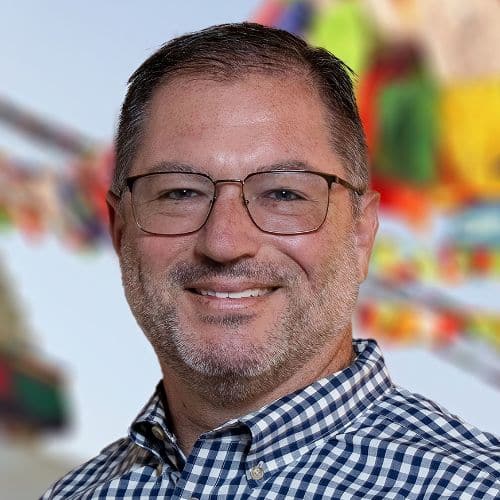
David Rettinger

Tricia Bertram Gallant

James M. Lang

Click on this text to view the video transcript
– I am here today with David Rettinger who is an Applied Professor of Psychology at the University of Tulsa and the co-author of a new book on cheating with Tricia Bertram Gallant. So, David, I know that your disciplinary background is cognitive psychology. So, how’d you get from there to becoming one of the leading researchers and writers on academic integrity in the United States?
– Well, it’s completely by coincidence, which is amazing. It’s one of those little origin story moments. My main background is in decision science, although I did a bunch of stuff in working memory way back when. My very first teaching job was at Middlebury College in Vermont, and I was standing in the doorway of one of my colleagues who studied decision-making. His name is Gus Jordan and he did some of the early work on cheating and, in particular, honor codes. And so, Gus and I were talking about how decision science methods could really be nice in supplementing surveys in academic integrity research. And the next thing you know, we’d literally in the doorway designed a study which we had some of our undergrads help us run. That became Rettinger and Jordan. And then, we had some other undergrads who were amazing and wanted to continue, and that became Rettinger, Jordan, and Peschiera. Those were back in the early 2000s and the rest is kind of history. As a side beautiful note, Gus is also a Methodist minister and married my wife and me back in the 2000s as well.
– That is a beautiful side note. That’s great. So, it sounds like your interest in this field started with collaborations and actually this book is now a collaborative effort as well. So, you collaborated with Tricia Bertram Gallant, another one of the leading researchers in academic integrity in the United States. So, tell me how that collaboration came about and tell me about the process of co-writing a book together.
– Sure, well, everything I’ve done honestly has been collaborative in research and really in teaching as well. Every paper I’ve published has either been with other co-authors from the field or with my undergraduate students at Mary Washington. It’s just how I like to do work and how I think I’m at my best as both a teacher and a scholar at the same time. So, I love working that way. The day I met Tricia for the first time, you were actually there. We were at an academic integrity conference where you were the keynote right after giving lessons and she and I had emailed back and forth before. And sometimes you meet somebody and you realize that you’re thinking about your work on exactly the same wavelength. That was one of those days. There was a little bit of technical talk about beer involved as well.
– Yes.
– But one thing led to another. We wound up going with her parents actually and some other folks to a brewery that trip. But it became clear that we could work together really well. And it also became clear to me that our backgrounds and experiences compliment each other. We’ve both done a lot of different things in the field, and I think that’s one of the things that we have in common. I’ve spent a lot more time in the classroom than most folks in academic integrity and at that point had never spent minute one doing any policy work, whereas Tricia runs an academic integrity office, I dare say the best one in the country. And so, she’s taught, of course, and now since I’ve done some policy work, but we really mesh together very nicely. So, when we were talking with you and the notion of a book in this series came together, we absolutely knew that we had something to say and that the moment really called for something positive about academic integrity. What we didn’t know is if there’d be an audience for it. What we’ve been saying to ourselves internally is, well, yeah, we don’t really have anything new to add in terms of teaching and learning or academic integrity from our perspective, but what we realized is that people in both of those fields really haven’t been talking with people in the other field and have really been talking about the big picture stuff, even if they’ve been talking about the practical stuff. So to put this together, it turns out that we’re saying some things that people hadn’t heard before, which is a pleasant surprise to us. But we’re really happy to be part of this conversation, especially right now. AI is absolutely forcing us to rethink a lot of things that we thought were fundamental and we really are really pleased to be part of the conversation because it’s going to be a bumpy ride and we’d like to help smooth it out if we possibly can.
– Yeah, so let’s go to AI actually, because I know from my own sort of background and being part of one of the series editors of the series that the book comes out in, you started thinking about it actually before GenAI was introduced. And so, how did that shape… But then, you started doing some writing already, but then it came out and you had to… How much did that change your thinking or what ended up in the final product of the book?
– Well, I joke about this with folks because we sent you that first draft maybe two weeks, within two weeks of ChatGPT-3 being released to the public. And then, there was this gap while you read it. And I think Tricia and I both understood fully well that we had written a book that was outdated the day we sent the email. So, at one level, we completely rewrote the book. The examples had to change dramatically. The issues and concerns changed in a lot of the chapters. In yet another way, we didn’t change it at all because our book is a positive approach to academic integrity, not a way to stop cheating. And so, a good chunk of what we talk about is ways to help students understand why they’re doing what they’re doing, ways to help them be better students, be better people and AI doesn’t change any of that. AI is another way of… It lowers the barrier though for students to make bad choices. And so, it really does make this book that much more necessary. Having said all of that, AI absolutely raises some new concerns and we address those in the book, in particularly big questions like the ones I’m sure you’re thinking about a lot as a writer, which is what does a world look like where someone can put forth a fully-formed, at least internally coherent idea, without actually understanding a word of what’s in it, right? Writing has always been… my favorite writing teacher, Frank Yates, who is a professor of mine at Michigan, once said writing is nature’s way of telling you how unclear your ideas are.
– I love that.
– Love that and it’s been the way I’ve thought ever since. And actually rhetoric has been that way ever since before written history. What happens in a world where intellectuals can create work that doesn’t require rhetorical effort? I don’t know. But we’re gonna have to figure that out as instructors, as intellectuals, and as assessors of knowledge. And so, the book gives us a little bit of a direction of how to think about some of those challenges because they’re definitely going to be the challenges for the next generation.
– Absolutely and I was actually quite surprised and pleased to see how well when the final manuscript… I just re-read the book for the first time since I had seen it a year ago or something, and I thought you really walked that line very well. Yes, some things have changed here and you have to account for these things and the examples expanded to fill all these new ways that people might cheat or not cheat, but the principles were still pretty fundamental that I saw from the initial draft to this one. These are the best ways to think about how do we approach this very difficult problem. And so, I think that leads me to the title. And so, the title’s a little ear-catching there, “The Opposite of Cheating”. So, tell me what that title means and how that relates to the book’s fundamental thesis.
– Well, when I give keynotes and when I talk to folks, I think people are often asking me, how do I stop people cheating? How do I stop cheating? And I think it’s the wrong question really, but of course, I understand why people ask it because that’s what brings them to me, per se. And the answer is, I was quoted in “The Chronicle of Higher Ed” and it’s very flippant, but I don’t think it was wrong, which is teach better. And I think cheating lessons really hit the nail on the head for me, and it changed the way I thought about things, which is we’re not trying to stop cheating. We’re not in a punitive model. Yes, of course there have to be consequences for misconduct, otherwise it’s not really misconduct. But at the end of the day, we are trying to help students do the right thing instead of avoid doing the wrong thing. And in order to do that, we have to articulate what the right thing is and the ways of getting students to do that. And the good news is all of that is about helping students learn. Dee Fink’s work and a lot of the work that the folks in the POD Network do about authentic, meaningful learning is where it’s at for me. It’s stopping cheating is about promoting learning. The two are mutually exclusive. And so, if we help students be better learners and make better choices when there are threats to their learning, we’re going to reduce misconduct without sacrificing what we really care about, which is student learning.
– Yeah, that’s great. And you keep mentioning decisions and choices and all that stuff, and, I think, one way I try to think about this is that I’m going to do everything I can to help students be their best selves in the classrooms in terms of the way I would teach, create that environment, and support them and all these different things that we can do. So, you mentioned something like trying to lower the barriers or in terms of making the good choices. These are ways of thinking about, yes, it’s not just about necessarily just teaching necessarily from a cognitive perspective, but also like the whole process of teaching and learning and how do we shape that process to help them make the best possible choices in the classroom.
– Yeah, there’s a lot of work in decision science. You think about Thaler and Sunstein’s “Nudge” work, but choice architecture more broadly. And what we do is we want to build situations where it’s easiest. The easiest things for students to do are the things that help their learning and that are their best selves, like you said. And if we do that, we can promote learning without having to be police.
– Right, exactly. Okay, so final question here. Now obviously, you mentioned written assignments and the fact that writing is one of the things that people really feel threatened in their written assessments with AI. And so, give me a place that a faculty member should start. I’ve been using these assignments for a long time, I’m really concerned about them. And so, how do they start reshaping their thinking, especially in terms of like written assignments?
– Absolutely. The book really gives examples at lots of different levels. In fact, the very first draft of the book, we had sort of beginning, intermediate and advanced examples and we got rid of that distinction as an organizing structure, but the ideas are still in there. And so, let me do that real quick. A lot of us don’t have much time to make changes, so let’s start simple. Anytime you give a writing assignment, make it as customized as possible to the student and the context. AI of course can generate nonsense of any sort, including personal nonsense, but the more you know your students and the more you ask them to write about things you share in common that AI doesn’t know about, it’s harder for the AI to produce something believable. Can a student use AI for this? Sure, can it pass by use? Definitely, especially the less you know your students, but it’s a low effort change and it’ll do some good. Next, once you’ve done that, you can start being a little bit more sophisticated. A lot of folks already do scaffolded, repetitive revision-based assignments. Good, keep doing that. Of course, AI can do those things as well, but it’s harder, it’s more complicated and it gives you more opportunities to notice a student is doing something that you wish they wouldn’t and help them learn how to do the right thing. This is also a chance to maybe get away from traditional writing assignments. There’s a lot of talk about authentic assessment and I think that’s a word that makes a lot of folks cringe as if writing is somehow inauthentic. The term I prefer to use is something that gets at the idea that you wanna make the task relevant and interesting to students. For some students, that is writing absolutely. I use a choose your own deliverable assignment that I really like. It does make it easier to cheat, but it also maybe motivates them a bit. So, I get art projects with artist statements, I get blogs and blog posts. Now let’s be clear, AI can do all of those things. None of this is gonna stop a student from using AI from a structural standpoint, but it hopefully will motivate them to see why this will be good for them to do the work. And maybe a few more of them will choose to do it because they say to themselves, “Oh, yeah, I really always wanted a reason to learn how to build a website for my career path.” And then at the last top level, this is the big overhaul type stuff. Really it comes down to the big pedagogical changes that are security focused. Give student an oral viva, as they call it in Europe, where you bring students in and have them talk with you in person about their writing. There’s no way to fake that. If you didn’t write the thing, you won’t be able to talk about it in the same way that a genuine author will. Or have an in-class writing assignment that follows up on the written work. It’s a little bit more scalable, a little less dynamic. Those things take a lot of time and effort on a faculty member’s part, but they’re great for helping students consolidate their knowledge and it makes it really hard to cheat.
– Yeah, actually, I love actually thinking about combining these two things because you could actually have students do their written assignment, but then also the oral is added to that, right? So then, you write the paper, then you come to the office and explain what the process was like. That’s great for learning, right? ‘Cause I’m reflective about my learning, about the writing process. The other example you gave is, produce the product, turn it in, but then we’re also gonna write about it in class. And so, both these things are great, again, good for learning, but also showing the students, yeah, you can do the product with AI, but you’re still gonna be up against it when you get in my office or in class or whatever it might be, to incentivize them to really do the work and embrace the process of work and then thinking about the work, right? And so, these are great ways to actually… You could add that kind of thing initially in like small things, for example, like even writing a paper, turning it in and writing a one paragraph overview of what you did in class, right? So, it can be small too.
– Absolutely. And I’ll also add the easiest, simplest thing you can do to reduce cheating is help students understand what’s in it for them when they do anything, whatever it might be, assignment, exam, reading. Why did you assign it? What’s in it for them? This is not to pander or coddle or any of those things. It’s to engender that metacognitive structure that says, okay, this is part of my learning because… And doing that, it’s cheap, it’s easy. It doesn’t require any major changes in what we do, but some percentages of students who are honest, if you give them the right circumstances, will absolutely embrace that.
– Yeah, that’s great. Okay, so a lot of great other strategies in the book and how can folks learn more about you and the work and the book? Tell me what’s the best ways for people to reach out to you?
– Well, probably the simplest place is at our website, which is theoppositeofcheating.com, but I’m also findable on the University of Tulsa’s website or through, and I’d love to encourage you all to check this out, the International Center for Academic Integrity at academicintegrity.org.
– All right, great, thank you. Good luck with the book.
– Thank you, Jim.
In this video, James M. Lang (Professor of Practice, Kaneb Center for Teaching Excellence, University of Notre Dame, USA) speaks with David A. Rettinger (Applied Professor of Psychology, University of Tulsa, USA) about his book The Opposite of Cheating: Teaching for Integrity in the Age of AI, co-authored with Tricia Bertram Gallant. David shares his thoughts on artificial intelligence, collaborative writing, and how they had to rewrite the book following the widespread adoption of AI technologies.
References:
- Dee Fink’s Taxonomy of Significant Learning explained by Rebecca Mills, Director of Learning and Teaching, Champlain College
- Fink, L.D. (n. d.). What is ‘Significant Learning’? University of Oklahoma
- Gallant, T. B. and Rettinger, D. A. (2025). The Opposite of Cheating: Teaching for Integrity in the Age of AI. University of Oklahoma Press.
- The Opposite of Cheating website
- Rettinger, D.A., Jordan, A.E. & Peschiera, F. Evaluating the Motivation of Other Students to Cheat: A Vignette Experiment. Research in Higher Education 45, 873–890 (2004).
DISCUSSION
What does it mean for you to teach for integrity in the age of AI?
Please share you thoughts in the comments section below.