

Empowering Sessional & Graduate Teaching Assistant (GTA) Faculty: Navigating Challenges in Higher Education
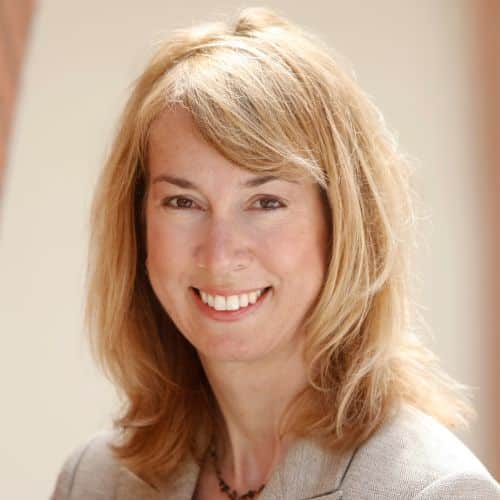
Adrianna Kezar

Anna Conway
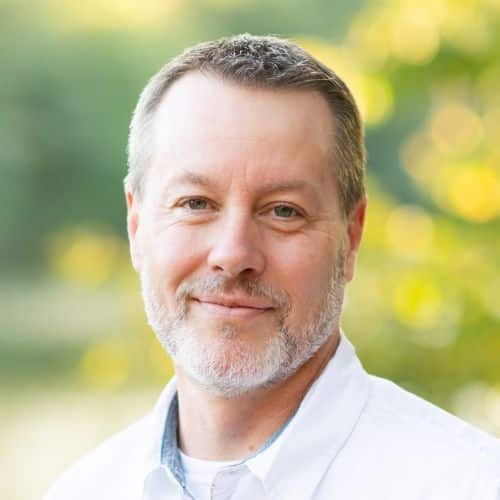
Michael S. Palmer

Click here to view the video transcript
– Okay, I can see some people coming into the room, so we’re gonna get started. This is all being recorded for those of you who can’t make it and can watch again after the event. So first of all, welcome to this webinar on empowering sessional and graduate teaching assistant faculty. My name is Mark Jones and I’m one of the co-founders of OneHE. If you don’t know who we are, OneHE is an online platform that provides educators with short courses and other forms of professional development that help them to develop and enhance their teaching. And we’re really passionate about giving educators in our sector the tools and the support that they need to be great in their roles, because ultimately great teaching leads to great student outcomes. And we have a particular interest in supporting what we’ve called sort of non-tenured faculty, which is part of our scalable way of working. And indeed, we have a prize draw for institutions to win free access for 100 of your non-tenured faculty to get access for a year. And we’ll post details of that competition in the chat. But let’s get started, so I’m delighted to be joined today by three people who are doing excellent work in and around the field of non-tenured faculty, both adjunct sessional and graduate teaching assistants. And I’d like to invite them now to introduce themselves. So let’s start with Anna Conway.
– Yes, hi. Hello everyone. It’s great to be here. And thank you for joining us for this conversation. I am Anna Conway. I work at Des Moines Area Community College in Iowa, United States. And for seven years I’ve served as Director of Teaching and Learning here. We started the centre seven years, and I was able to develop adjunct support programmes, adjunct professional growth programmes, and research the area of the topic and the field. Since then, I’ve became a chair and now oversee three departments at Des Moines Area Community College and work a lot with adjuncts. And so my work is intertwined with supporting hiring, supporting adjunct faculty, sustaining their teaching and their overall commitment to our institution and finding ways to support them. And sometimes I’m not just talking monetarily. I’m talking, you know, as a climate. We live in difficult times right now in Iowa. There’s a lot of political situations happening. So I think this is an important time to talk about adjunct faculty and contingent faculty.
– Brilliant. Thank you so much, Anna. Adrianna.
– Mark, thank you so much for the invitation, and good morning or good afternoon, depending on where you’re at. My name is Adrianna Kezar and I’m a professor at the University of Southern California, and I direct the Pullias Centre on Higher Education, which is dedicated to advancing equity, particularly around student success for who come from historically minoritised backgrounds. I also lead something called the Delphi Project on the Changing Faculty and Student Success, and this is a project that’s been around for 12 years. It’s dedicated to better supporting what we call vital faculty, because we think that this population is absolutely essential for higher education to meet its goals and objectives and what has often been turned non-tenure track or adjunct, and through this project, we offer an award called the Delphi Award for campuses that are doing particularly good work in supporting vital faculty. We offer research and data about how to improve the working conditions and support, and have been doing so for many, many years. We’ve got case studies about campuses that you can look at and identify better ways to support your vital faculty on your campus. So welcome everyone. It’s great to be here for this conversation.
– Thanks very much Adrianna. And Michael.
– Yes, hello. Thank you for the invitation to participate in this. My name is Michael Palmer. I’m at the University of Virginia, and I direct our Center for Teaching Excellence. I’ve been at UVA now 24 years, and in the Center a little over 20 of those years. I’ve been directing the center for about 10 years. Our center was established in 1990 on a TA development grant. So humble origins, and has grown to, I guess, maybe what would be described as a medium sized center these days with a purview of all instructors who teach graduate students, faculty, tenure, tenure track, non-tenure track, the whole – whole realm of that. So I think I’m maybe the odd duck in this panel. Will focus my comments on our work with graduate student teaching assistants, which I think even today takes up about 40% of our portfolio, so it’s still pretty large. And that’s dedicated graduate student support. Of course, almost everything we do is open to all instructors.
– That’s great. Well, thank you all three of you for joining us today, and thank you to our participants online as well. So, like I said at the beginning, our topic today is focusing on empowering sessional and graduate teaching assistant faculty, and as Michael’s just indicated there, we’re gonna talk about those as two distinct and separate groups. And if you’ve got any comments or questions, then please drop them into the chat and I’ll try and introduce those into the conversation as as we go along. But I’d like to start by getting our panel’s perspective on the role that adjunct sessional and GTA faculty play in our sector today. And, you know, maybe start by asking yourself, Anna, you know, how have we come to get here? What’s the historical perspective?
– Yeah, absolutely. So if I can take you quickly on a little history lesson here, in the first part of the 20th century, American colleges and universities invited part-time faculty, what we now call adjunct or sessional, contingent faculty, as a sign of prestige. It was a symbol of prestige and a marketing tool for universities and colleges to have an expert to teach part-time and provide one-of-a-kind instruction to share their unique experience in medicine, you know, in healthcare, in religion. There’s a variety of fields. So a lot of things have changed, and the concept of part-time faculty as a special asset or a marketing tool for colleges and university disappeared from the academic community in the second part of the 20th century, when we know after the World War II, the United States opened technical and community colleges and expanded access.
So looking at today and actually a few years, the data I have from 2021, 2022, 2/3 of all faculty members in the United States have contingent appointments, 2/3. And just to give a perspective, in 1987, it was less than half. So we have acquired quite a few part-time faculty in our system of higher education, and we know now that the over-reliance on the adjunct in the US system of higher education threatens the success of institutions, and fulfilling the obligation to the society, to students, to the commitment of education in general. So I think it’s very important to understand that right now we’re living in the time when there is a huge over-reliance on adjunct faculty. And and that is why this conversation is so important, and supporting and finding ways to sustain professional and academic culture within your institutions with support for part-time faculty is absolutely essential today.
– Yeah, that’s really great. That’s a good starting point. Thanks for that, Anna. Adrianna, if I can maybe bring you in at this point as well. You know, how would you characterise our use of non-tenured faculty in the sector today?
– Yeah, building on what Anna just said, we took an existing model that was meant to be a small portion of our workforce, and just expanded it up because people were trying to find a solution to a variety of kinds of things, from cost savings to thinking about getting more attention from faculty to teaching. So rather than trying to shift priorities amongst the tenure track, like hiring different ones. So it was kind of a wrong fix to existing problems, and now we, you know, have this very large, unsupported group of faculty members, and so, you know, and adjuncts, which at Anna mentioned, over 52% of the faculty, have the worst of the conditions. We now have about 18% of our faculty as full-time non-tenure track, and those have much better support. They tend to have longer term contracts, more job security, more parity with salary. They’re gonna be much more likely to be invited to professional development and have that, you know, as part of their contracts. And so they’re not, there are still issues for our full-time non-tenure track, but, really, our part-timers are the ones where we need the most work.
So just, it’s important to think on your campuses and to even know, some campuses don’t know, how many full-time do they have, how many part-time do they have? Like really kind of understanding who are the different groups of the non-tenure track faculty on your campuses? And they can be a varied group. So some of them can be, you know, some part-timers are misnomered because they’re teaching full-time. They’re not really part-time. They’re actually teaching a tremendous number of courses, but that’s how they’re categorised. Some of them are only teaching one course and come and go. And so, this kind of really scattershot, if you will, approach to now our employment creates a lot of problems when we try to think about support. So we’re doing it poorly and we’re setting up conditions where it’s complex to do and we now need to collect data to even understand these faculty members better so we can bring in the needed support.
– Yeah. I mean, I think that’s a really important point, isn’t it? ‘Cause we can tend to default into talking about adjunct sessionals being a homogenous group, but you have a really wide range of people taking part in it. There’s some people who are gigging in multiple institutions to make up a full-time wage. You know, the people who’ve been called the sort of precariat who are on unstable conditions. You’ve got people who are maybe brought in, a bit like you were describing, Anna, originally, as conceived where people are coming in because they’re experts in industry, but they may be doing a few sessions here and there. So it’s quite a broad community that we’re talking about. And Michael, GTAs themselves are a separate group, aren’t they? That’s a very separate unit. So tell us a bit about, you know, the role of GTAs maybe in the sector and at UVA.
– Yeah, so I guess some context or background, you know, there’s something like 4,000 institutions of higher ed in the US. I believe only 10% of those are PhD-granting institutions, and so the training of TAs is relegated to, essentially, a small number of institutions, and how those institutions manage graduate students, the role in the institution, how teaching is valued as a graduate student, of course, varies all over the map. But in most cases, institutions that are training graduate students find that labour absolutely necessary. If you can get a place at UVA, it has 20,000 students, I think something like 40,000 course listings. I mean it’s just the enormous amount of courses, you know, that you need extra labour, and that ends up falling on graduate students. Clear back in, I guess, 2011, I wrote a paper with some other folks. Did a national survey of how graduate students were being trained. And this was, it was essentially titled “10 years After National Reform Efforts,” which were really big in the early 2000s.
And the good news there is that there was a lot of work that was going on. There were TA orientations, there were new courses, there were all sorts of things to help support graduate students. And even here at UVA, we’ve seen an evolution over time in terms of what the responsibilities and the training they get, and obviously that’s shaped what we do at UVA. Now, it still varies all over the map though, right? And so unfortunately not all students, graduate students, are prepared to take on the roles they need to, which if they end up staying in the professor, which we know is a very small number, then they’re not prepared for that job, right? And I think the other complicating factor is graduate students themselves are students, but they’re also educators, right, and so they’re in this liminal space of trying to figure out how do I be a student at the same time? How do I help my own students? And so there’s some unique challenges there. You know, at some institutions, there are unions in place. You’re seeing a growing call for that. And of course that is, you know, I think there’s been some exploitation there, and there’s really an opportunity for institutions to continue to invest in graduate student education and certainly help them prepare for the broad range of roles that they might take on following their graduate career. Our centre at UVA has been dedicated to helping them with their instructional development and other units on grounds help with more broader professional development.
– Yeah, yeah. And we often find out where we are getting involved with institutions as well, we’re looking at how the work that OneHE does in providing the sort of additional layer of support that can come in on top of the work that’s already been done by centres. I’m wondering if we can dip into some of the work by centres first, and maybe, Anna, if you could tell us a bit about what POD has been doing, ’cause you are active in the POD network, and there’s been a specific-
– Absolutely.
– Spread of activity, hasn’t there? Yeah, absolutely. And if I could just add a few thoughts to Michael’s point before that. So what Michael’s center is doing is absolutely wonderful, and you know, there is a lot of preconceived notions in institutions of higher education that you every now and then hear that teaching is a natural skill or it comes with experience. And so a lot of graduate programmes, they focus on a lot of initiatives that have nothing to do with instructional support, and you know, and they just place the graduate students into teaching, and it’s kind of sink-or-swim environment. And oftentimes the emphasis is on sustaining the focus of the programme, but not on the teaching side of things.
So I just wanted to say, Michael, that what you do in your institution in Virginia is absolutely wonderful, and it’s great to hear that, because you know, there’s seldom preparation when it comes to quality teaching, especially for graduate students. So as far as POD Network, I would actually encourage a lot of attendees here, if you haven’t joined or heard of POD Network to give it a try. It’s a wonderful organisation, and we do come together once a year to discuss our best practises and things that work or don’t work in the form of annual conference. And so we have a special interest group, called SIG, on adjunct faculty and contingent faculty. Actually, the terminology is so broad, like, I heard you mention sessionals, that’s also something.
– Yeah.
– Yeah, so there’s a variety of ways to talk about part-time employment in higher education when it comes to teaching and learning, and so what we do is we offer sessions on different topics such as supporting, you know, financially how do you support and find solutions to, you know, pay your faculty for training? Or we talk about growth, we talk about mentoring programmes, we talk about things that don’t work, or the programmes that were shut down with diversity, equity and inclusion initiatives that kind of evolved initially out of that. So there’s a lot of inequity when it comes to adjunct employment in current situation in Iowa and other, you know, universities and colleges. So this is an opportunity where we are able to sustain this conversation throughout the year, you know, collectively present and exchange. And that’s how, by the way, I learned about OneHE is also through POD and meeting some of the colleagues and Olivia Fleming who run the organisation. So, I would highly encourage those who are interested in this topic to look up POD, look up special interest groups for adjunct faculty, and there’s other groups as well, and just give it a try. It’s really worth your time.
– Yeah, that’s great. I posted a link in the chat there for the network and the special interest groups as well. I’m wondering if you can bring in Adrianna there as well, because you also are looking at practise across the sector in terms of terms the Delphi Project as well. So maybe tell us a bit more about the kind of things that you’ve been learning from that.
– Sure. I think in many ways, Anna, you’d agree, like there’s a good deal of synergy between what our two groups provide. POD provides a real space for conversation and exchange. It’s a community, and it’s a wonderful place for people to talk about real-time, you know, ways to support each other. What the Delphi Project offers is resources, I think, that hopefully many of the members of POD utilise in terms of, we have guides for campuses or departments depending on what level you’re trying to work at, about how you can provide support for, again, vital non-tenure track faculty. And these guides are reflective guides to walk you through. What are all the issues you should be focused on? And what data do you have to support how this is going? Like, do you know what the policies are around, you know, hiring, you know, around contracts? And so it’ll walk you through the kinds of areas you should should be considering. And I already mentioned in addition to sort of these guides, we have case studies of campuses that are doing really good work, so you can see. And it builds in, like Anna says, like some of the people who are in the POD conversations will be sharing some of their best practises. This gives you a nice library of best practises to build from.
And we also have data available about the issue, ’cause we find a lot of campuses the issue is awareness. Like, colleagues need to be convinced or understand the issue. So we have guides that talk about what are the problematic working conditions, so that people become aware, because they may not know. Or what are the numbers more nationally? And then that can, you know, really interest people in collecting their own data on campus, ’cause you do need to understand the situation at the local level. So we provide a lot of the data, resources and guides that can pair up with very nicely a community that can then have conversations and utilise these to help enable local conversations. So, you know, here’s where, you know, PODs where you can go to talk to other people who are interested in this, but sometimes often trying to convince their colleagues about the need for these changes. And so we provide a lot of that, I think, advocacy, literature and support and data at our center.
– Yeah. Yeah. And maybe if you can tell us a bit as well about, you know, I’m assuming a lot of people who will have registered for this and will watch this after the event will be in a position where they’re thinking about how they can do more for their non-tenured, and one of the things that you’ve worked on in the past has been kind of the process side of it. So where do you need to start? So if somebody is coming to you now and sort of saying, “I need to put something in place. We’ve got a bit of leadership backing.” You know, we know we need leadership to be backing it in the first instance, but let’s say they’re over that hurdle, where do you think they should really start?
– Absolutely, and I’ll put a link in the chat. We have a report called “Design for Equity in Higher Education.” And this report was based on studying campuses that have had really successful practises, they’ve created really strong climates and environments in support of non-tenure track faculty. And in looking at them, they all follow a really similar process. And so this report will outline it, and I’ll just mention a few aspects. The first thing they do though is they start by what we call empathising, but like getting to know what the working conditions are really like for their adjunct or vital faculty and what, you know, what’s the life like, and not assume it’s monolithic. Don’t just talk… A lot of people, just like an administrator will talk to one faculty member and be like, “Okay, I know.” You know, that is not systematic and that leads to really poor policy. So we need to approach this in a way where we really hear the voices.
So it’ll talk about ways to set up focus groups, ways to do surveys, ways to ensure that you really get at and understand the voice. But then it talks about the need to really break out of our current system, so the ways to ideate beyond, as we talk about it, our current systems. Because if you’re trying to do this within our current systems, you’re always going to end up recreating the same inequities. So it helps see how did people think differently so they were able to break out and create very different policies and practises that don’t reinforce the same inequities that exist within our current system. Talks about also not only just understanding the experience of non-tenure track faculty, but also to do, you know, a really thorough needs assessment of then, what are all the kinds of things they report? ‘Cause I can talk to you about, nationally, what we see are the very poor working conditions, but that varies on every campus, what they’re really doing that makes it difficult, particularly difficult, for non-tenure track faculty.
You know, on one campus it may be I can’t access anybody in technology and I teach at night, and I need, you know, I need support. But on another campus, it can be a very different set of struggles where they’re talking about all of the professional development is offered at times where they can never get to it and they’re really struggling, or they want more advanced professional development. I mean, the needs can vary so tremendously. So without a really good needs assessment, you just won’t, you know, provide the local sort of correct support. So I think our resources give you a really good picture of the things to look at, but then you really need to understand how your system has been set up in particular to create certain challenges. So I’ll put that link in the chat, and I think it’ll be really helpful for people who wanna understand a good process to follow to be able to support their faculty.
– Yeah, that’s great. And Michael, if I can come to you on this, I mean GTA is a different working conditions, different setup entirely, really, but I’m assuming that you have a similar kind of process in terms of understanding GTAs. I mean, how did you go about designing, developing the programme of support that you’ve put in place for your GTAs? I think that could be helpful for other people to understand.
– Yeah, let me start with a little context, because, you know, context always shapes what’s possible for you in your local environment. So, you know, UVA is a highly selective public R1. 18,000 undergraduates, a little over 6,000 full-time graduate students. If you think about our faculty, we have about 1800 instructional faculty. 1/3 of those are non-tenure track faculty, but full-time permanent non-tenure track faculty. So our center, as I mentioned, established in 1990, was focused on graduate student professional development, mostly around instructional development. We report to our Vice Provost for Faculty Affairs. And so we serve all 12 schools at UVA, which is a pretty big mandate, although we do the least amount of work in our school of medicine because their situation’s so unique. In my center, we have 13 full-time folks working here, some faculty fellows and some grad interns. All of our programming is open to all instructors, regardless of status or rank. And so even though we do have some programming specific to graduate students, most things, they’re open to all of those.
So, you know, from those humble beginnings, we’ve developed a number of programmes over the past 20 years. A lot of that work was done in the, you know, 2010s and so forth. I’ll just give you a highlight of what we’re doing. Remember, most of our work is instructional development. A lot of what’s changed over the years, and it was a really good move that UVA did, is every graduate student at UVA is guaranteed five years of funding. And that doesn’t mean… Generally they’re teaching two semesters, so five years guaranteed funding teaching two semesters. That was a huge change, right? Because in the past, graduate students were taking on all sorts of teaching responsibilities to get paid to do that so that they could live and then were struggling to finish their degrees. And so they were staying here, you know, six to eight years. And so some of the changes, so it’s one thing you can say, I’m gonna support them in their development, but if you’re fighting against the system, that makes it really hard. And so we’ve been fortunate enough that the system has bent to allow us to do some good things. So like many institutions, we have a an orientation to teaching at UVA. We’ve modified that over the years, particularly in the pandemic has really shaped that.
And so it encouraged us to think about asynchronous modes of orientation to teaching. And we’ve stayed with that model, so we have a asynchronous course graduate students can take, and then there’s a synchronous in-person component that complements that, and that happens every August. So that’s a big thing. We’ve just developed an extension of that, which, well, the program’s called TAGS, Teaching as a Graduate Student. You know, centers for teaching and learning are big on acronyms, so it’s TAGS. building on that we just created TAGS+, and OneHE content is something that’s really helped us with that. So it allows us to continue to work with those graduate students throughout the academic year with pretty little effort, right? Because we can quickly pull together a group and say we’re gonna watch this 20-minute seminar on topic X. We’ll offer this shared space online. Come to that. And so that’s really extended that work. We have a preparing future faculty-like programme that we call Tomorrow’s Professor Today. A colleague of mine, Deandra Little, who’s now at Elon, developed that in about 2008, somewhere around there. It’s morphed over the years, but there’s two tiers to it. And so it’s really geared for, the first tier is geared for those who are TAing right now that need support, and the second tier is for those who imagine themselves becoming faculty and wanna do a deeper dive into teaching topics. And there’s courses that come with that, workshops, peer observation, teaching requirements, a whole host of things.
And it’s highly flexible, so students can take as long or as little time as they need to finish that, and they can stop whenever they want. We also, like many centers, consult with graduate students. We can do peer observations, focus groups, that sort of stuff. As I mentioned, we’re in the business of instructional development. My center’s pretty, our mission’s pretty narrowly focused, but we know that graduate students, like faculty, are real people, and so they have broader professional development needs. The university has this really cool programme called PhD+, which we don’t have a centralised graduate school, but it sits in our provost’s office, and it’s really about career professional development, recognising the graduate students, some are gonna become faculty, but most aren’t. Some are gonna go into industry, some are gonna go into government, some are going into non-profits, the full range. And so there’s a whole host of opportunities. Teaching is one of those that we help support, but there’s things like entrepreneurialship, or grant-writing, or science policy, or things where they can become like mini-experts in those areas so they can have that credential when they go off into the real world. So lots of opportunities, thinking, again, holistically about the graduate student experience and the various stages they might go through during their time at UVA.
– Yeah, that’s really, really helpful. And I think maybe if I can come back to you, Anna, on this, just to think about, you know, what you are seeing that’s worked well in the sector, particularly for the more the adjunct, or we’d say in the UK maybe sessional faculty. You know, what’s sort of working there and how far do the sort of support programmes that you see, do they look at the wider needs of adjunct and non-tenured faculty in the way that Michael’s sort of been able to describe from UVA?
– Absolutely. And I just want to set the context that Michael is in a university, I’m in a community college. We’re a two-year institution, so there’s a lot of the, like you said Michael earlier, context makes a huge difference. And resources-wide, not every community college, not every five community colleges have a center for teaching and learning or enhancing their teaching for faculty, so there is very little, oftentimes you were working with limited resources. And I’ve come across that, even though our institution is fairly large. I wanted to maybe offer a couple of starting points, if that’s okay, and those are the conversations that I started with, and the conversations are questions about to what extent do your adjunct faculty or your graduate students currently express a sense of collegiality, belonging, inclusions? And what is your data for that? You can just start these informal conversations with your faculty members, with your department chairs, you know, and how do we know that they belong? How do we know that they feel that they are part of these institutions? And then that leads to another question about who are the key stakeholders in our institutions, right? Who are the people that can support the graduate student voices, the adjunct voices, and overall include adjuncts and other important faculty and student members in decision-making, in instructional decision-making, in those conversations?
So those are like the first two conversation starters that I would definitely recommend in any way, and then lastly, I would talk about policies. ‘Cause oftentimes there is gaps in policies and practises and there is norms and barriers in the way that, you know, pretty much create a sense of disconnection for these groups, and so examining these practises and looking up to really who does own these policies and how can we revise them or, you know, expand our institutional capacity to broaden the impact and engagement of various groups, those are some of the things that I started at as, you know, inaugural director of teaching and learning, ’cause our community college did not have a center for teaching and learning. And then based on the feedback, and of course I would also ask adjunct faculty from a variety of departments.
Based on that, I started building programmes. So I built adjunct professional growth, APG, again, using the acronyms here, which is all about identifying the areas that were mostly needed. And that was pre-pandemic, so we talked a lot about, you know, technology and how do we enhance our engagement and work with students through technology. And so constantly being in contact and two-way street with your students or your adjuncts is how you build an effective programme. And then you look for funding, and then you look for opportunities to reimburse and acknowledge the time. And oftentimes, that’s a huge barrier as is, especially in community and two-year institutions, where we have very limited resources. Sometimes I literally had to go in the office of the Dean and just say, please, could you please support? I have a group of 15 adjuncts from your department, and it really went down to that we have more, you know, established practises now, and I feel like this was just the beginning. But oftentimes, we have to be very respectful towards the professionals and their time and we ask a lot of their time, so finding that support.
And so these are the starting points that really helped me to be connected with our adjunct faculty, and I’m sure there is more. And if I could put a short, in 2023, Thomas Tobin and I wrote an article about all instructors deserve professional development. I think it’s in ‘Inside Higher Ed.’ I also can post a link where we listed some of these questions and best practises that have worked for our institutions. So that’s something that I think if anybody’s interested, they could have a deeper dive in.
– Yeah, that’s a great point. It’s a good article as well. I remember reading it at the time, and I think we entirely agree with that, the whole idea that, you know, everybody’s deserving of professional development, as you would expect. Adrianna, just to come onto that, and maybe this is we’re into our last five minutes here, is just to say, you know, picking up on what Anna’s saying, we’ve talked a lot about context being really important and about what you can do within your individual institution, but is there something systemic here that we also need to be addressing in terms of the equity issue in particular?
– Absolutely. And let me just build off of Anna’s last comment. One of the reports that I put in the chat, it was called “Accessible and Inclusive Professional Development for Vital,” again, that’s what we call adjunct faculty. That was a study we conducted of campuses that specifically designed their professional development for these populations. We find a lot of campuses, they design it and then say, okay, well let adjuncts come to this, but they don’t necessarily design it with the adjunct faculties in mind. So this is a report that tells you how to think differently when you’re designing for this population, and so I think that’ll be helpful, because it talks about some of the systemic challenges that they experience, which is why you need to think, on many campuses, uniquely about… And this is everything from, you know, modality or timing, but also who’s in attendance, because sometimes adjuncts will not feel comfortable with tenure track faculty members in the room, depending on the topic. So it’s a lot of different issues that we identify are really specific to designing strong professional development for this population.
But one of the things that we identified very early on in the Delphi Project was that there is this knee-jerk reaction that the best way to support non-tenure track faculty is just to offer professional development, as if that’s going to be kind of a bandaid to fix all of the issues, and as if, in some ways, they’re the problem to be fixed. Like, so they just need better training or something, and then then they’ll be these amazing instructors, and that there’s not something wrong with the higher education system that doesn’t support them. So I think just underlying this, I always say to people, you need to be thinking about what are the barriers you have in place that make it very difficult for adjunct faculty to be successful, to, well, what I call perform optimally, to help lead the student success? And we have examples of this.
So one of the Delphi winners, Bay Path College, you know, they looked at everything from how were they hiring people. Again, we hire people too last-minute. It’s impossible to teach a course well if you hire somebody the day the course is starting. It has to do with, you know, then providing them the kind of like resources, like a sample syllabus, or what are the learning objectives, or just like basic information so they can be successful. That’s a more systemic problem. It has to do with like broader institutional, you know, they don’t get the proper orienting, or any mentor or connection with the campus. So you have these campuses like Bay Path who rethink everything from hiring down to promotion and leadership opportunities on the higher end, you know, inclusion and governance so that you have an ongoing voice in changing policies and practises.
So I really, you know, suggest to you that you think about professional development within the sphere of this, you know, just much larger system of policies and practises that impact performance. And once you do that, it becomes, you know, you be much more able to make adjuncts successful. And tying this to things like promotion and rewards as well. Like most, a lot of times professional development is kind of, you know, unattached from sort of any incentive or reason to be involved for this group of faculty in particular, so I’ll cede any last time. But I just would have, you know, people were listening to this really think about, you know, not being narrow in your thinking, but being expansive in your thinking, and that will help you to best support this population.
– Hmm, and I know the argument always comes up is about resource and availability of resource, but so often I feel we are not very good at doing the return on investment conversation about actually, well you know, if you look at things like attrition stats or you know, or even the churn within the population of people who teach on our programmes, often our first-year programmes, you know, there’s a huge cost associated with those things as well. That means that, you know, a bit more investment into that wider support system that sits around the faculty who are teaching, you know, the better.
– I’m really glad you brought that up, Mark, and I did put a resource in the chat about dispelling the myth, because for years I used to hear, “We can’t do anything because there just won’t be the resources to just, to help in any way adjunct faculty.” But we cost it out, the cost. There are so many things that are no-cost, low-cost, and then, in particular for all of the benefit you get on the other end, which isn’t even a part of, you know, just looking at the expenditure equation, this, you know, it really does pay for itself, and campuses that start down this road always start investing more, ’cause they realise… It’s Metropolitan University in Denver, they were able to increase retention rates of students by over 20% just by investing more in their faculty and hiring more full-time faculty versus relying on part-time faculty. So there are campuses where we can see through data the return on investment.
– Return on investment’s an interesting conversation with graduate students and one that I deal with often. Why shouldn’t we invest in graduate students when we know they’re gonna leave, right? And so in some ways, we rely on the altruistic nature of other institutions to help train graduate students, knowing that their students are gonna come here. So it’s a very long-term investment, and in fact we’ve seen it here at UVA. Since the efforts nationwide to improve graduate student education, we have seen a change in way our new faculty think about teaching. So what our orientations used to be look very different because they’re coming in much more pedagogically savvy. And so, but that’s a hard sell to say this is a return on investment, but we’re relying on other people to actually make sure that investment comes to fruition.
– And speaking of investment, if I could just add one statement, is that we found out and we know from research that it costs more to replace temporary workers than to hire and retain and support them. And that applies to any worker, and it applies to adjuncts and graduate students, so when we’re constantly onboarding and rehiring, we are actually destroying a lot of the culture and momentum, versus supporting the ones that we do have and finding the opportunities for them to do well in our institutions, so.
– Yeah, that’s a very good point, and a great point to end us on as well tonight, Anna. Thank you so much for that, and thank you to all our panelists. I just wanted to come back to something I said at the beginning, which is that we’ve got a prize draw for people who are participating. The link’s just gone into the chat, but essentially we’re giving three institutions 12 months free access for up to 100 of your non-tenure faculty. That means they can get access to all of the courses that are in the platform. They can join the webinar series that we run every few weeks. They can take part in, access any of the resources that we’ve got on there. Just go to that link, put in your contact details, and we’ll do a draw from the virtual hat on the 1st of November and drop an email to the successful institutions and see if you want to take up that offer. But for now, it’s just left for me to say thank you very much to Anna, to Adrianna, and to Michael for joining us for what’s been a really fascinating discussion. Thank you to our attendees for joining today, and we hope to see you at a future webinar. Thanks very much, everyone.
In this webinar, Mark Jones, co-founder of OneHE, moderated a discussion with a panel of experts on the evolving landscape of higher education in the USA and its impact on sessional and GTA faculty. The panel addressed challenges faced by educators on non-permanent contracts and explored strategies for institutional support. The expert panel included:
- Adrianna Kezar, Director of the Pullias Center for Higher Education at the University of Southern California, USA, who discussed equity and support for adjunct faculty.
- Michael S. Palmer, Director of the Center for Teaching Excellence at the University of Virginia, USA, who shared strategies for supporting GTAs.
- Anna Conway, Pathway Chair for Communication, Education and Humanities at Des Moines Area Community College, USA, who offered insights on adjunct faculty support through her leadership of the POD Network Special Interest Group on Sessional Faculty.
The discussion covered macro, institutional, and individual perspectives, focusing on broad trends in staffing and the workforce. The session provided insights on setting GTAs up for success in their first teaching roles and throughout their careers.
Useful resources:
- The Delphi Project – A University of Southern California-led initiative supporting change in faculty roles to enhance teaching and institutional development.
- POD Network – A community focused on professional development for higher education faculty, offering resources to improve teaching and leadership.
- Culver, K. C., Harper, J., & Kezar, A. (2021). Designing accessible and inclusive professional development for NTT faculty. Pullias Center for Higher Education, University of Southern California.
- Kezar, A., & Maxey, D. (2013). Dispelling the myths: Locating the resources needed to support non-tenure-track faculty. Pullias Center for Higher Education, University of Southern California.
- Conway, A., & Tobin, T. J. (2023). Adjunct instructors deserve training. Inside Higher Ed.
DISCUSSION
What strategies can institutions use to better support sessional and GTA faculty?
Share your thoughts in the comments section below.