

How to Encourage Active Citizenship for Students
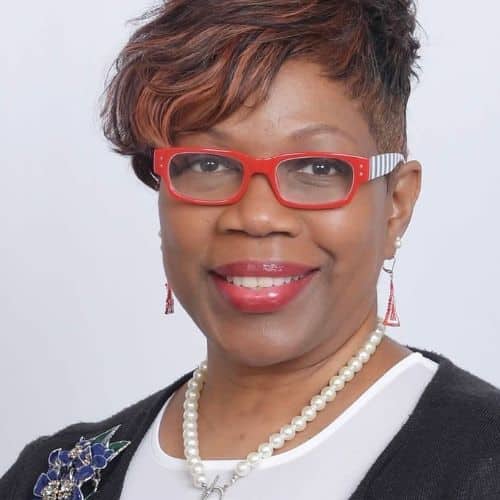
Dawn Moore
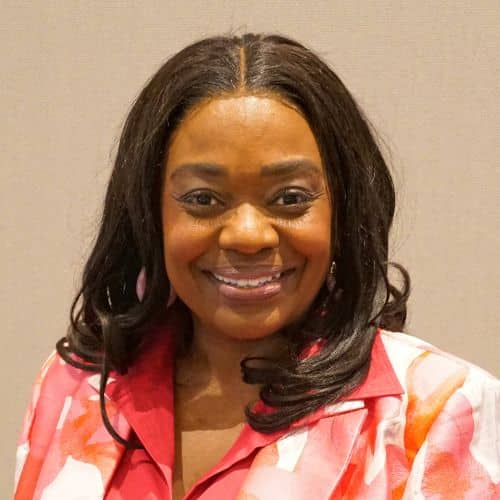
Michelle Chambers

Click here to view the video transcript
– Good afternoon, Professor Moore.
– Good afternoon, Councilwoman Chambers. Thank you for meeting with me today. As a professor in the United States, I’m deeply concerned about the low civic engagement among our students. And I know as councilwoman, you have done great work in community outreach and can you share some insight with me today?
– Yes, absolutely. Thank you for that question. It’s somewhat sad that we do have low civic turnout here for our young people. Unfortunately, in our last election we had less than 11% of the registered voters turn out. However, I tried to work hard to engage our younger people, literally meeting them where they’re at. I had the opportunity to literally work with middle school students and simulate in an election. We were able to work with the election board and we brought in voter machines, and essentially we just had them rate social media platforms, but they went through the whole process of logging in and learning how you use a voter engagement machine. And then I also, when I say meet them where they’re at, I literally did a voter engagement, voter education about the one-on-one, about city council, what you do on city council. I went to a bar in the middle of the afternoon, and I had a whole voter engagement and I did get individuals registered to vote. So what I believe is that we have to do as a nation, at the federal state, and local level, is meet our young people where they are at. What I do know for sure is in the recent elections in Chicago, it was the young people who got the current mayor elected. Not our seasoned seniors, but the young people who were intentional and getting the new mayor elected. So I’d say that we as a nation can learn to meet young people where they’re at for voter engagement and get them involved in the civic process.
– And, you know, that is definitely very well said, and the other thing is that some students seem apathetic towards local politics. They feel their votes don’t matter or that some issues don’t directly impact them. And it’s frustrating, especially considering, just what you said about the young people in Chicago, their idealism and their passion.
– So what I like to say when I have young people push back with that thought process, I always share the story about our mayor here. The first time that mayor, our mayor is Mayor Tom Henry, the first time that he ran for mayor, he had actually lost by five votes, but when they did a recount, he ended up winning by one vote. So, I love to share that story to let them know, absolutely your vote matters. Because if you’re a registered voter and you have the opportunity, one of my initiatives is to get younger people to serve on boards and commissions. So if you are registered to vote, you’ve been connected to a party and for me it doesn’t matter your party affiliation, it really is people over politics. I can have the opportunity to appoint you to the Park and Recs board or whatever you may have an interest in. It’s not necessarily about you having a professional skill set, it’s about you having the passion and desire to serve. But we, as elected officials, public servants, have to meet our younger people where they’re at. But I just love to give that example, literally our mayor won by one vote. Pardon me, this is when he was a councilman, not mayor. I wanna make sure I go on record correctly, is when he was running for councilman, when they did a recall, he won by one vote.
– Very good, that’s fantastic to hear. And making that connection between real-world problems and their academic pursuits can be a true game changer.
– Agreed, I agreed. You don’t necessarily have to have a degree in political science or public administration to be engaged in local politics. You just really have to have the power, pardon me, the passion, and have someone that is advocating for you and willing to teach you about how important it is for you to exercise your right to vote.
– Wow. And you mentioned, and I hadn’t thought of that, because you mentioned about like, even if they created a social media campaign showing, showcasing students making a difference, that’s a brilliant idea in terms of social media, giving them a platform and ownership over some local issues would definitely spark their interest.
– Oh, absolutely. Social media has been instrumental in me being re-elected. I literally lived on, and I don’t know how many people have come up to me and said, “Hey, I follow you on social media.” “Hey, my whole family voted for you. We were following you on social media.” And you have to meet our current generation where they’re at. Unfortunately, or fortunately, the smartphone is where our constituents live, whether they’re young people or seniors, folks live on their phones. And so you have to meet individuals where they’re at. And it’s social media, it is so. And it’s not like for my demographic, it’s Facebook, but for the younger people it’s Instagram and Snapchat and all those good things. And now, believe it or not, LinkedIn, which is a professional networking site, that’s even another critical place to, what, meet people that are engaged. So social media is absolutely a tool to be used. I can’t say that I was innovative eight years ago when I decided to utilize social media. I took that from the Obama campaign. That was one thing that Obama, President Obama set a, set the precedent for, utilizing social media to its full scale to reach the masses.
– Good. Councilwoman Chambers, this has been a very insightful conversation. Thank you so much. I feel so much more optimistic about engaging our students and like you said, meeting them where they are. Thank You.
– Thank you Professor Moore. I truly appreciate you selecting me to have this conversation with you, and I’m looking forward to you continuing to engage your students, thank you.
– Thank you.
In this video, Dawn Moore, Associate Professor, Trine University, USA talks to Michelle Chambers, Councilwoman, City of Fort Wayne, USA about how to encourage a sense of active citizenship among students. Michelle shares strategies that will help empower college students to engage meaningfully in civic processes and drive positive change.
Here are some actionable steps that you could use to encourage active citizenship amongst your students:
1. Voting Poll Simulations:
Action: Organise mock elections in class. Divide students into candidates, voters, and election officials.
Discussion questions to use in class:
- “What qualities make a good candidate?”
- “How can we research candidates effectively?”
- “What are the roles and responsibilities of election officials?”
- “Why is it important for everyone to participate in voting simulations?” (Discuss the importance of practice and understanding the voting process)
2. Meet Each Student Where They Are:
Action: Have open dialogue about students regarding where they stand with civic engagement—including voting and other forms of civic participation. Allow students to share and showcase inspirational leaders engaged in social action (particularly from social media).
Discussion questions to use in class:
- How do you feel about civic engagement—what are the motivations and challenges involved in this kind of social responsibility?
- Who do you follow on social media that is making an impact in civic engagement and why do you follow them?
- What platforms/apps are you checking most regularly to learn about social issues and civic engagement?
3. Emphasise Civic Engagement Beyond Voting:
Action: Brainstorm a list of ways students can be active citizens besides voting (e.g., attending town halls, writing to representatives, volunteering in the community).
Discussion questions to use in class:
- “What issues are important to you in your community?”
- “Besides voting, how can you make your voice heard?”
- “Research local organisations that need volunteers. How can we get involved?”
DISCUSSION:
What opportunities exist within your courses/curriculum to discuss issues of civic engagement and active citizenship? How can you integrate these topics?
Please share your questions and/or thoughts in the comments below.